
Overview
A well-planned lease exit strategy is critical for any commercial tenant, particularly those occupying industrial, warehouse and logistics property. Across the UK’s major logistics and industrial hubs including the Midlands logistics heartlands, the M1/M6/M42 corridors, the North West, Yorkshire, the South East and port-centric distribution locations we regularly see tenants incur avoidable costs simply through poor lease-end planning.
Missteps at this stage can lead to:
- Inflated dilapidations claims
- Extended lease liabilities
- Legal disputes and delayed exits
- Loss of deposits or additional financial exposure
This guide explains the most common mistakes tenants make at the end of a commercial lease, how much notice is required, and what happens if a property is handed back without being properly restored.
Speak to a member of the team
Common Mistakes Tenants Make at Lease End
Assuming Being a “Good Tenant” Is Enough
One of the most frequent and costly misconceptions is that good day-to-day occupation automatically equates to lease compliance. In reality, lease obligations and good tenant behaviour are not the same thing.
Tenants often invest heavily in fit-outs or operational improvements, particularly in logistics and industrial buildings. However, if the lease requires the premises to be reinstated to their original condition, those improvements may need to be removed at lease end even if the landlord previously welcomed them.
Always judge the condition of the property against the lease wording, not subjective standards of care.
Leaving Repairs and Reinstatement Until the Last Minute
Deferring lease-end obligations is a common error. Significant reinstatement or repair works particularly in larger industrial or logistics assets can take months to plan and deliver.
Tenants who wait until shortly before vacating often face:
- Higher contractor costs
- Limited programme flexibility
- Incomplete works at lease expiry
Best practice is to begin reviewing lease-end obligations at least 6–12 months before expiry, and earlier for complex or heavily altered buildings.
Not Understanding Notice Requirements
Incorrect or missed notice is a classic lease exit failure and can result in ongoing rent and liability even after you stop trading from the property.
Key scenarios include:
- Contracted-out leases (outside the Landlord & Tenant Act 1954):
Most fixed-term leases end automatically on expiry if you vacate. - Leases with security of tenure (1954 Act protected):
You must serve a Section 27 notice at least three months before lease end if you do not wish the tenancy to continue. - Break clauses:
Notice periods (often 3 or 6 months) and conditions must be followed precisely. Even minor errors can invalidate the break.
Failure to comply can result in “holding over”, meaning rent and obligations continue to accrue.
Skipping Proper Move-Out Preparation
Many leases require:
- Redecoration in the final year
- Removal of tenant belongings and fixtures
- The property to be left clean and tidy
Failing to complete these works usually leads to landlord-led remediation at a higher cost. Disposal of abandoned items, cleaning, and redecoration are common and easily avoidable dilapidations items.
Poor Coordination at Handover
Failing to coordinate the lease end properly often leads to disputes. Tenants should:
- Confirm key return arrangements
- Arrange a joint inspection where possible
- Photograph and document condition at handover
Leaving without a clear record puts control firmly in the landlord’s hands.
Not Taking Professional Advice on Dilapidations Claims
When faced with a terminal schedule of dilapidations, some tenants either ignore it or attempt to negotiate without expert input. This is risky.
Dilapidations claims are subject to legal limits and technical scrutiny, and many claims are initially overstated. Taking advice from a dilapidations surveyor can often result in significant reductions in the final settlement.
Speak to one of our experts about your situationHow Much Notice Do I Need to Give Before Ending My Commercial Lease?
The notice required depends entirely on the lease structure:
- Fixed-term, contracted-out leases:
Usually no notice required if vacating on expiry. - 1954 Act protected leases:
Section 27 notice required at least three months before expiry. - Break clauses:
Follow the notice period and service requirements exactly. - Surrender by agreement:
Requires landlord consent and negotiated terms.
Failing to serve valid notice can extend liabilities unintentionally, particularly for tenants operating across multiple sites or relocating logistics operations.
What Happens If I Leave Without Restoring the Property?
Vacating without complying with lease obligations typically triggers a terminal dilapidations claim.
Likely Consequences
- A landlord inspection shortly after lease end
- Issue of a terminal schedule of dilapidations
- A quantified demand for damages rather than works
The landlord may claim:
- Cost of repairs and reinstatement
- Professional fees (surveyors and solicitors)
- Loss of rent during remedial works
Because the landlord controls the scope and procurement of works, costs are often significantly higher than if the tenant had carried them out directly.
Lease Exit Timeline: What to Do and When
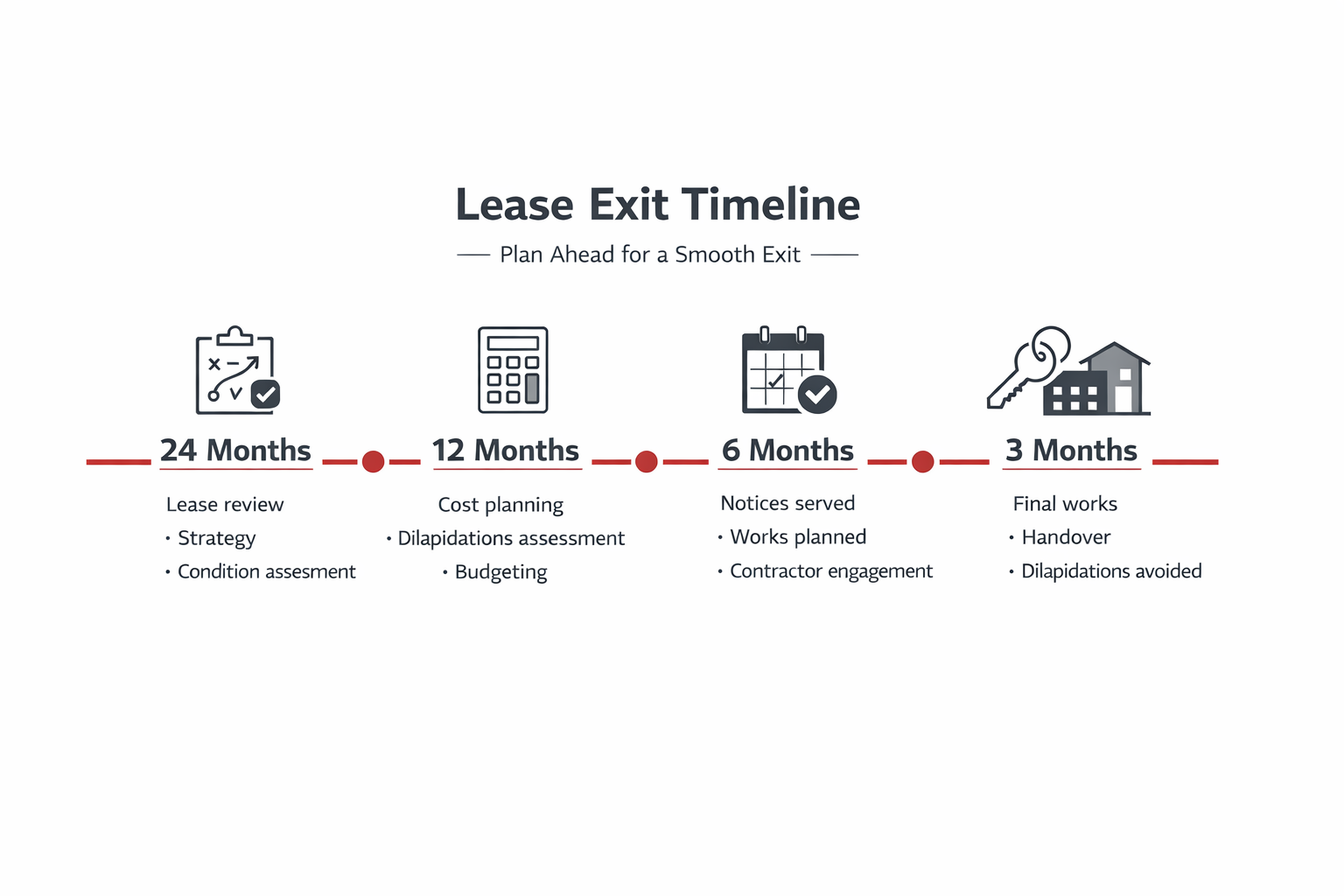
A successful lease exit strategy is driven by early planning. Below is a practical timeline showing what commercial tenants should be doing at key points before lease expiry to minimise cost, risk and disruption.
24 Months Before Lease Expiry: Strategic Review
At this stage, tenants should take a strategic view of their occupation.
Key actions:
- Review the lease in full, focusing on repair, reinstatement and yield-up clauses
- Confirm whether the lease is protected by the Landlord & Tenant Act 1954
- Consider business plans: renew, relocate, downsize or exit
- Instruct a surveyor to undertake a high-level condition review
- Identify long-lead items (roof, services, major alterations)
This is particularly important for industrial and logistics occupiers where reinstatement or repair works can be extensive.
12 Months Before Lease Expiry: Risk & Cost Planning
This is the point where financial exposure becomes clearer.
Key actions:
- Commission a detailed dilapidations or lease-end assessment
- Prepare an initial cost forecast for repairs and reinstatement
- Review notice requirements and break options
- Begin internal budgeting or provisioning
- Open dialogue with the landlord where appropriate
At this stage, tenants still retain maximum control over timing and cost.
6 Months Before Lease Expiry: Delivery & Notice Stage
This period is critical and often where mistakes occur.
Key actions:
- Serve any required notices (Section 27, break notices, etc.)
- Finalise scope of works or settlement strategy
- Procure contractors if carrying out works directly
- Agree access arrangements for inspections or surveys
- Prepare handover and exit logistics
Errors at this stage particularly around notice can extend lease liabilities unintentionally.
3 Months Before Lease Expiry: Final Compliance & Handover
This is the execution phase.
Key actions:
- Complete agreed repairs, reinstatement and redecoration
- Remove tenant fixtures, fittings and belongings
- Deep clean the premises in line with lease obligations
- Document condition with photographs and records
- Coordinate key return and formal handover
Leaving matters unresolved at this stage almost inevitably results in a terminal dilapidations claim.
About Fourth Wall Building Consultancy
Fourth Wall Building Consultancy specialises in UK commercial property dilapidations, offering expert surveying and consultancy services tailored to landlords and tenants. We offer:
- Highly Experienced Chartered Surveyors with a proven track record in dilapidations claims.
- Transparent Pricing Models to help clients budget effectively.
- Early Engagement Approach, minimizing costly end-of-lease surprises.
- Comprehensive Reporting using the latest digital tools for clarity and precision.
- Dispute Resolution Support to avoid expensive litigation.
Related Services
- Dilapidations surveys and schedules
- Pre-Lease compliance and condition assessments
- Building condition reports and maintenance planning
- Dispute negotiation and expert witness support
Real Buildings. Real Insight.
How we deliver clarity, value and strategic advice across the UK.
Our case studies show how Fourth Wall works in practice from navigating complex dilapidations claims and delivering development monitoring for commercial clients, to guiding heritage refurbishments and producing detailed RICS building surveys. Explore how we help landlords, asset managers, occupiers and developers make confident, informed decisions about the buildings they own, manage or occupy.





Frequently Asked Questions
The most common mistakes include leaving planning too late, misunderstanding repair and reinstatement obligations, missing notice deadlines, failing to redecorate or reinstate alterations, and not taking professional advice on dilapidations claims.
Notice requirements depend on the lease. Fixed-term leases contracted out of the Landlord & Tenant Act 1954 usually end automatically, whereas protected leases require a Section 27 notice at least three months before expiry. Break clauses also have strict notice requirements.
If a tenant leaves without complying with lease obligations, the landlord will typically issue a terminal schedule of dilapidations and seek a financial settlement covering repairs, reinstatement, professional fees and potentially loss of rent.
Yes. Early planning, proactive repairs, accurate cost assessment and professional dilapidations advice can significantly reduce final settlement figures and avoid unnecessary expenditure.
Ideally, tenants should begin planning their lease exit at least 12–24 months before lease expiry, particularly for industrial and logistics properties where reinstatement works can be extensive.