Commercial Real Estate Consultancy
Commercial Pre-Acquisition Surveys.
Understand the building, future CAPEX and technical risks before they become yours.
Buying a commercial property means acquiring far more than the bricks and mortar visible on inspection day.
You may also be acquiring an ageing roof, obsolete services, deferred maintenance, undocumented alterations, future energy-performance expenditure, landlord repair liabilities, external infrastructure and significant capital works that do not appear within the headline purchase price.
Fourth Wall provides Pre-Acquisition Building Surveys and Technical Due Diligence for commercial property investors, owner-occupiers, developers and asset managers.
We assess the physical condition of the property, identify significant defects and information gaps, consider likely repair and lifecycle expenditure and translate the technical findings into clear advice on what needs investigating, what should be budgeted for and what matters to the acquisition.
The purpose is not simply to tell you what is wrong with the building.
It is to help you understand what you are actually buying.
RICS Chartered Building Surveyors | Commercial Technical Due Diligence | Investor & Owner-Occupier Advice | UK-Wide Coverage
What is a commercial Pre-Acquisition Survey?
A commercial Pre-Acquisition Survey is a detailed technical assessment of a property undertaken before purchase to help the buyer understand its condition, risks, future expenditure and suitability for the proposed acquisition strategy.
The terms Pre-Acquisition Survey, Commercial Building Survey and Technical Due Diligence are often used interchangeably within commercial property.
RICS recognises each of these terms within its professional standard for technical due diligence, although it advises against using the term “structural survey” for this type of inspection.
A good Pre-Acquisition Survey should help answer questions such as:
- What condition is the building actually in?
- What requires immediate attention?
- What significant expenditure is likely during ownership?
- Which building elements are approaching the end of their useful life?
- What further investigations are needed before exchange?
- Is important technical information missing?
- Are there defects that could disrupt occupation or reletting?
- Does the property support the proposed investment or operational strategy?
- What issues should be raised with the vendor before commitment?
For the professional framework behind commercial Technical Due Diligence, see the RICS Technical Due Diligence of Commercial Property professional standard. RICS Technical Due Diligence of Commercial Property
A building survey should tell you more than what is defective
Identifying defects is only the beginning.
A leaking roof matters.
But the more useful advice is:
Why is it leaking?
How extensive is the problem?
Can it be repaired or is replacement approaching?
What will that cost?
When is the expenditure likely?
Will it interrupt occupation?
Is the existing tenant responsible for any of it?
Does the purchase price and investment strategy still make sense once that liability is understood?
That is the distinction between a condition report and useful Technical Due Diligence.
Our reports therefore focus on the significance of each finding rather than producing a long inventory of minor defects.
What are you actually buying?
A commercial property acquisition involves more than the current physical condition.
Depending on the asset, you may effectively be buying:
The existing defects
Known or previously unidentified repair liabilities.
Future lifecycle expenditure
Building elements that may currently function but are approaching major repair or replacement.
The consequences of previous works
Extensions, alterations, roof overlays, service modifications and refurbishments may carry defects, maintenance implications or missing documentation.
Existing occupational arrangements
Where the property is tenanted, responsibility for parts of the building may sit with the landlord, tenant or be recoverable through service charge.
Existing building services
Plant may be operational today while still representing substantial near-term CAPEX.
Energy and sustainability risk
Energy performance can affect future leasing, refurbishment strategy and investment expenditure.
Information risk
A missing roof guarantee, absent asbestos information or undocumented alteration can create uncertainty even where no obvious physical defect is visible.
Operational constraints
For an owner-occupier, the building may require works or upgrades before it can properly support the intended business operation.
The real acquisition cost is the purchase price plus the liabilities and expenditure that come with the asset.
We assess the property against your acquisition strategy
The same physical defect can mean something very different to different purchasers.
That is why the survey brief should start with why you are buying the property.
Property investors and asset managers
The focus may include:
- Near- and medium-term CAPEX
- Existing leases
- Landlord versus tenant repair liability
- Service-charge recoverability
- Future reletting
- Void exposure
- Energy performance
- Planned refurbishment
- Hold period
- Disposal strategy
The central question becomes:
Does the physical asset support the investment assumptions?
Owner-occupiers
A business buying premises to occupy needs to consider both condition and operational suitability.
That may include:
- Immediate repairs before occupation
- Heating and cooling
- Electrical capacity
- Loading arrangements
- Roof condition
- Drainage
- Accessibility
- Proposed fit-out
- Maintenance requirements
- Potential business interruption
The question becomes:
Will this building work for the business, and what will it cost to make and keep it operational?
Developers
Where acquisition is driven by refurbishment, conversion or redevelopment, the survey can help identify matters requiring further investigation before the design proceeds.
These might include:
- Existing construction
- Structural constraints
- Water ingress
- Existing services
- Hazardous materials
- Previous alterations
- Building envelope condition
- Planning or heritage considerations requiring specialist review
- Areas requiring intrusive investigation
The Pre-Acquisition Survey does not replace structural design, planning, environmental or other specialist due diligence, but it can help identify where those disciplines need to be brought into the transaction.
What does a Commercial Pre-Acquisition Survey include?
The scope should be tailored to the property rather than applied from a generic checklist.
RICS specifically advocates a tailored Technical Due Diligence scope appropriate to the asset and client requirements.
A typical Fourth Wall inspection may consider the following.
Roofs and high-level elements
Depending on safe access and the agreed scope:
- Roof coverings
- Rooflights
- Flashings
- Penetrations
- Parapets
- Gutters
- Rainwater systems
- Plant areas
- Chimneys and high-level masonry
- Previous repairs and overlays
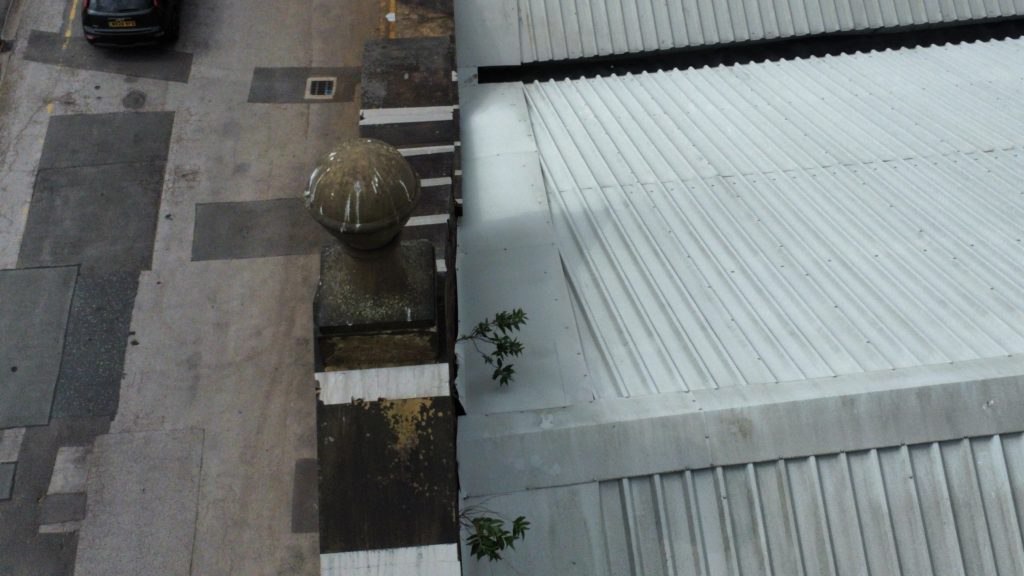
Where conventional access is inadequate, drone or other specialist access may be appropriate.
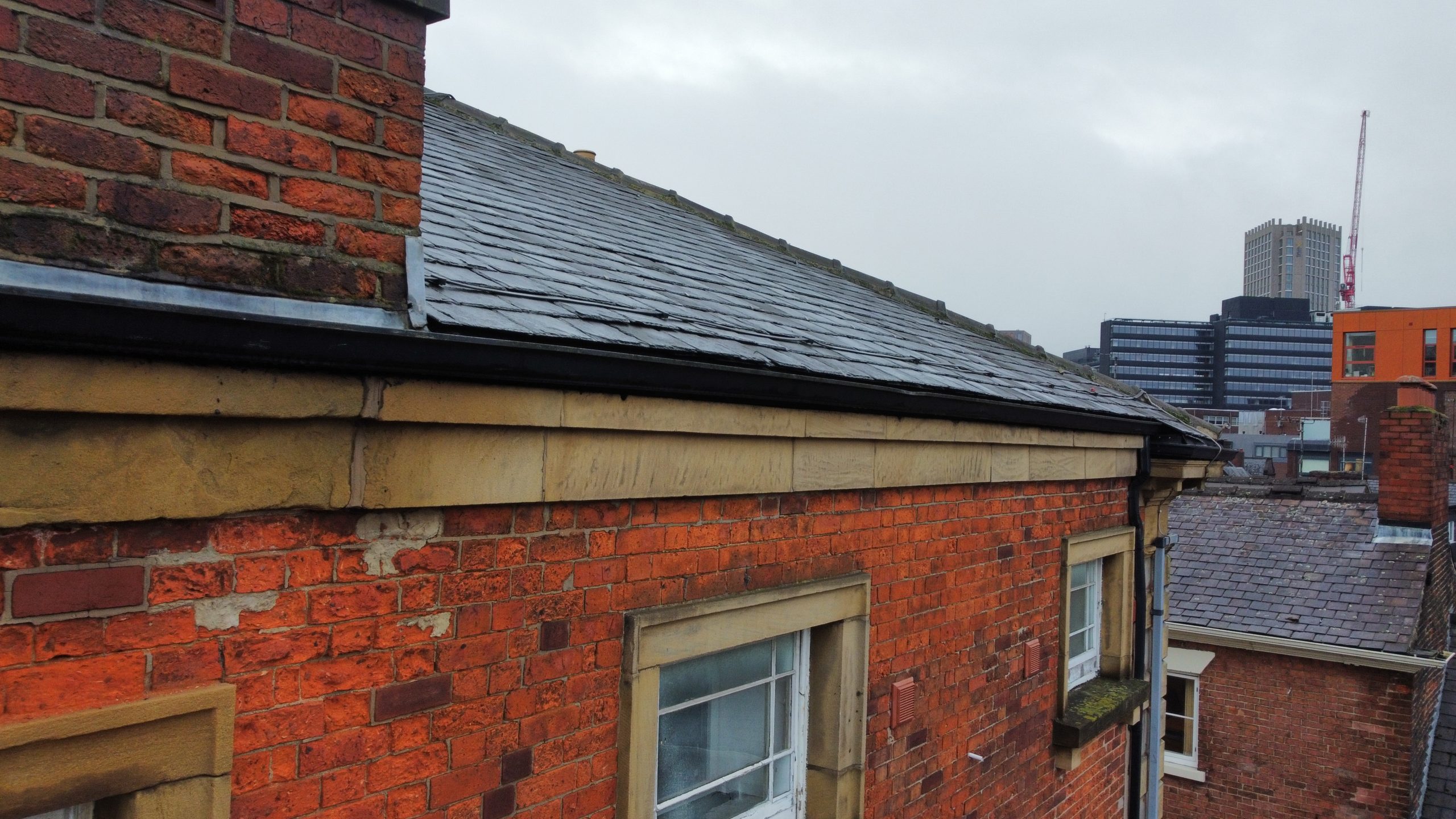
Our Eton End School Pre-Acquisition Survey included drone inspection of roofs, façades, chimneys and inaccessible high-level elements as part of a multi-building acquisition.
External walls and cladding
We consider matters such as:
- Masonry
- Renders
- Metal cladding
- Composite panels
- Curtain walling
- Sealants and joints
- Windows
- External doors
- Movement
- Weathering
- Impact damage
- Previous repairs
Where the façade presents specialist structural, fire or cladding risk, further assessment may be recommended.
Structure
The inspection considers visible structural elements and signs that may warrant further investigation, such as:
- Cracking
- Deflection
- Movement
- Corrosion
- Deterioration
- Altered structural components
- Evidence of overloading or impact
- Historic strengthening
A standard building survey is not a structural engineer assessment. Where specialist structural investigation or calculations are required, we identify this.
Internal fabric
Depending on the building:
- Walls
- Floors
- Ceilings
- Internal doors
- Joinery
- Dampness
- Water ingress
- Finishes
- Previous alterations
- Areas of intensive wear
The focus is on matters that have material technical or financial significance rather than minor decorative defects.
Industrial floors, loading and logistics areas
For industrial and logistics acquisitions we pay particular attention to:
- Concrete slabs
- Joints
- Local settlement
- Racking damage
- Machinery fixings
- Loading bays
- Roller shutters
- Dock levellers
- Service yards
- Gates
- Fencing
- Hardstanding
These elements can represent substantial expenditure across large floor and yard areas.
External areas
The demise may also include:
- Roads
- Car parks
- Yards
- Paving
- Drainage
- Retaining structures
- Boundary walls
- Fences
- Gates
- Landscaping
- External lighting
These are sometimes overlooked in building-focused inspections despite potentially material repair costs.
Building services can be one of the largest hidden CAPEX risks
Mechanical and electrical services can represent some of the most expensive and operationally disruptive elements within a commercial property.
A building may appear to be functioning normally on the day of inspection while still containing ageing plant, limited remaining service life, poor maintenance history or systems that could require substantial investment during the purchaser’s intended period of ownership.
Depending on the asset and scope, relevant systems may include:
- Heating
- Cooling
- Ventilation
- Electrical distribution
- Lighting
- Controls
- Water systems
- Drainage
- Lifts
- Fire-safety installations
- Specialist plant
A general building survey will usually provide visual commentary on accessible services, but it is not a substitute for detailed engineering assessment, testing or specialist M&E Technical Due Diligence.
Where the size, complexity, age or value of the installations warrants more detailed assessment, we work with a number of specialist MEP consultancies that understand the standard of service and reporting we expect for our clients.
Fourth Wall remains the single point of contact, coordinating the wider technical due diligence process and incorporating the relevant specialist findings into a coherent overall view of the acquisition. This avoids the purchaser having to manage several disconnected consultants and helps ensure that building fabric, services, CAPEX and transaction risks are considered together.
The result is a coordinated due diligence service rather than a collection of separate technical reports.
A system being operational on inspection day does not necessarily mean it has a long remaining service life.
What will the building cost you after completion?
The most important acquisition risks are not always the defects that require attention immediately.
A roof may still be performing on the day of inspection but be approaching the point where major repairs are likely during the purchaser’s intended hold period. Mechanical plant may remain operational while having limited remaining economic life. Cladding, external finishes or hardstanding may show early-stage deterioration that is unlikely to justify immediate replacement but should still feature in future capital planning.
That is why our Pre-Acquisition Surveys look beyond current condition and consider the likely timing, scale and consequence of future expenditure.
For each significant item, we aim to help the purchaser understand:
- What is defective or deteriorating
- Whether intervention is required now or can reasonably be planned
- The likely form of repair or replacement
- When expenditure is likely to arise
- The broad scale of the cost
- Whether the issue could affect occupation, reletting or refurbishment
- Whether further investigation is needed before the acquisition completes
- How the expenditure fits within the proposed ownership or investment period
Immediate expenditure
These are issues that may require action before occupation or shortly after completion because of active failure, health and safety concerns, operational risk or the potential for deterioration to accelerate.
Examples might include active water ingress, unstable elements, significant drainage failure or defects affecting safe access.
Where an issue is sufficiently material, we may recommend that it is investigated, priced or addressed before exchange or completion rather than simply carried into the purchaser’s future maintenance budget.
Short-term CAPEX
Some building elements remain serviceable but are likely to require expenditure within the first few years of ownership.
This can include:
- Roof repairs or coating works
- Rooflight renewal
- External decoration
- Localised cladding repairs
- Joint and sealant replacement
- Drainage improvements
- Concrete slab repairs
- Overhaul or replacement of ageing plant
These items may not affect the decision to acquire, but they can materially change the initial business plan if they have not already been allowed for.
Medium-term lifecycle expenditure
For investors and long-term owner-occupiers, the condition of major building elements should also be considered across the expected period of ownership.
For example, an acquisition may look attractive based on current income and immediate repair requirements but become materially less attractive if major roof, façade, lift or building-services expenditure falls within a five- or ten-year hold period.
Where appropriate, our advice therefore identifies significant lifecycle issues that should feed into future CAPEX forecasting and asset planning.
Longer-term maintenance strategy
A Pre-Acquisition Survey is not intended to replace a detailed long-term maintenance plan.
Once the acquisition has completed, clients who require a structured programme of future repairs and expenditure can develop the findings through our Planned Maintenance Reports.
This can provide a more detailed year-by-year view of anticipated maintenance and capital expenditure across the asset.
A property can be in reasonable condition today and still represent significant capital expenditure tomorrow. The objective is to understand that exposure before it becomes part of your ownership cost.
The survey should reflect your intended hold period
The same building may represent a very different acquisition risk depending on the buyer’s strategy.
An investor intending to dispose of an asset in three years may focus heavily on immediate and short-term expenditure.
A purchaser planning a ten- or twenty-year occupation will need a much broader view of lifecycle replacement and maintenance.
We therefore encourage clients to tell us how they intend to use and hold the property, so that the technical findings can be considered against the actual acquisition strategy rather than a generic maintenance timeframe.
Why choose Fourth Wall for Commercial Pre-Acquisition Surveys?
A Pre-Acquisition Survey should do more than describe the condition of a building. It should help you understand what matters to the transaction, where future expenditure sits and what needs to happen before you commit.
Fourth Wall combines detailed building surveying with practical transaction advice, giving investors, asset managers and owner-occupiers a clear view of the property they are considering acquiring.
Transaction-focused Technical Due Diligence
We do not measure the quality of a survey by the number of defects we can list.
Our focus is on the issues capable of materially affecting:
- The acquisition
- Future CAPEX
- Occupation
- Reletting
- Refurbishment
- Asset performance
- Future disposal
Significant findings are prioritised so the purchaser can quickly understand what should be investigated, costed, raised with the vendor, referred to another adviser or accepted within the business plan.
Strong technical building knowledge
Our wider commercial work includes defect diagnosis, roof and façade inspections, planned maintenance, repair specifications, dilapidations, project management and contract administration.
That practical experience matters when assessing whether a deteriorating roof needs localised repair or major renewal, whether cladding deterioration is cosmetic or systemic, or whether cracking to an industrial slab represents routine maintenance or significant future expenditure.
We do not simply identify the symptom. We aim to explain the likely cause, appropriate response, timing and commercial consequence.
Coordinated specialist MEP and technical advice
Building services can represent one of the largest hidden risks within a commercial acquisition.
Where specialist MEP Technical Due Diligence is appropriate, we work with a number of trusted MEP consultancies that are committed to the level of service and reporting we expect for our clients.
Fourth Wall remains the single point of contact, coordinating specialist inputs and bringing the material findings together with the building fabric, CAPEX and transaction advice.
Where structural, fire, drainage, asbestos, environmental or other specialist investigation is required, we can similarly help coordinate the appropriate expertise.
ESG considered as part of the asset strategy
We do not treat ESG as a standard paragraph added to the end of the report.
Where relevant to the acquisition, we consider how physical condition and future CAPEX interact with matters such as:
- Energy performance
- Building-services replacement
- Repair versus unnecessary renewal
- Retention and reuse of existing materials
- Accessibility and occupier experience
- Future refurbishment
- Quality of asset information and ESG reporting
This allows the purchaser to identify where planned lifecycle expenditure could also support wider environmental, social or asset-performance objectives.
Commercial and heritage expertise under one roof
Historic and listed commercial buildings require a different approach to modern assets.
Traditional construction, previous inappropriate repairs, heritage significance and restrictions on future alteration can materially affect both repair cost and redevelopment potential.
Fourth Wall’s dedicated heritage expertise means these issues can be considered alongside the commercial Technical Due Diligence rather than treated as a completely separate exercise.
We can stay involved after completion
The Technical Due Diligence report often becomes the starting point for the new owner’s asset plan.
Where required, Fourth Wall can continue to support the property through:
- Planned Maintenance Reports
- Project Management
- Contract Administration
- Repair and refurbishment advice
- Commercial Dilapidations
- Heritage consultancy
This creates continuity between identifying risk before purchase and managing it once the property is yours.
Our job is not to tell you that an imperfect building is a bad acquisition. It is to make sure you understand the risks, costs and opportunities well enough to decide whether it is the right acquisition on the right terms.
Commercial Pre-Acquisition Survey Case Studies
Technical Due Diligence is most useful when the findings change what the purchaser knows, budgets, investigates or does next.
Our Pre-Acquisition Surveys are therefore designed around the transaction rather than simply recording building condition.
The following projects demonstrate how we combine technical building inspection, modern survey technology, risk prioritisation and commercially focused reporting to support acquisition and asset-management decisions.
Pre-Acquisition Condition Survey | Eton End School, Berkshire
Multi-building Technical Due Diligence supporting acquisition and future CAPEX planning
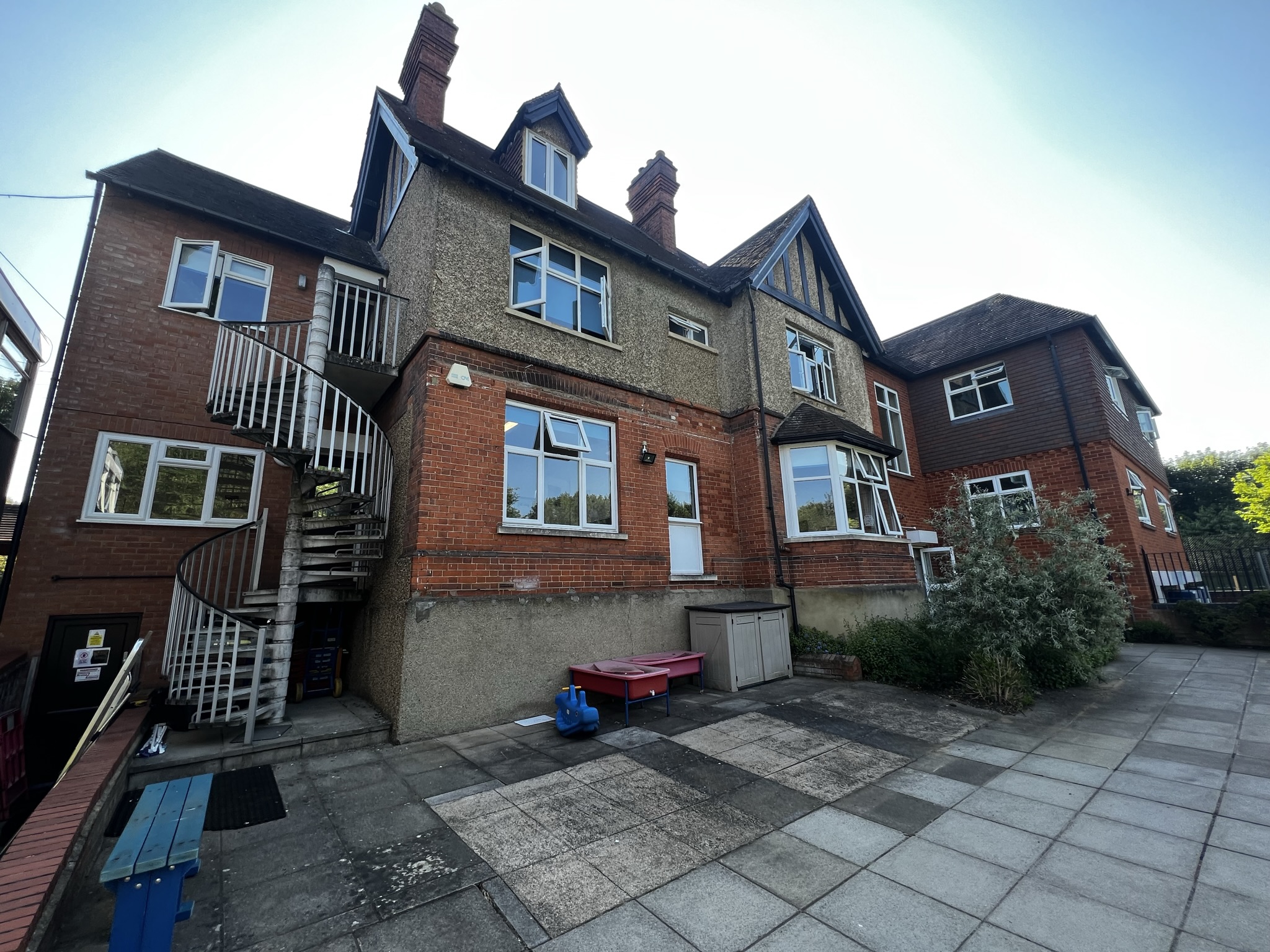
Fourth Wall was instructed by Chatsworth Schools in connection with the proposed acquisition of Eton End School, a live multi-building education estate in Berkshire.
The client needed more than a conventional building-condition report.
The acquisition involved an operational school campus of approximately 5.4 acres, incorporating buildings of different ages, construction types and roof forms. Safeguarding, continuity of education, access to high-level elements and future capital investment all needed to be considered alongside the physical condition of the estate.
The challenge
For a live education estate, a defect cannot be considered purely in isolation.
A roof repair, drainage failure or major maintenance project may also affect:
- Safeguarding
- Pupil and staff safety
- Teaching operations
- Access
- Term-time working
- Future maintenance budgets
- The timing of capital projects
The client therefore needed to understand both what was wrong and what the findings meant for ownership after completion.
Our approach
We developed an acquisition-specific Technical Due Diligence scope covering the buildings and wider estate.
Our work included:
- Pre-Acquisition Building Condition Surveys across multiple structures
- Detailed inspection of accessible internal and external fabric
- Drone inspection of roofs, façades, chimneys and high-level elements
- Identification of defects and deterioration mechanisms
- Assessment of lifecycle and future maintenance issues
- Prioritisation by urgency, operational risk and financial significance
- Advice to support acquisition discussions
- Short-, medium- and longer-term capital planning
Using drone inspection was particularly valuable because it allowed high-resolution assessment of extensive and otherwise difficult-to-access roof and façade areas without introducing unnecessary disruption into the operational school environment.
Turning condition into acquisition advice
Rather than simply categorising defects by condition, we considered what each significant finding meant for the client.
The report distinguished between:
Immediate risk
Matters requiring early attention because of condition, safety or operational consequence.
Near-term expenditure
Works likely to require investment during the initial ownership period.
Lifecycle CAPEX
Larger future repairs and replacement requirements that should inform longer-term budgeting.
Further investigation
Areas where additional information or specialist assessment was required to reduce uncertainty.
This allowed the technical findings to feed directly into the client’s acquisition and future asset-management planning.
The result
The client received:
- A consolidated, evidence-backed understanding of condition across the estate
- Improved visibility of inaccessible roof and façade areas
- Prioritised technical and operational risks
- Clearer short-, medium- and long-term maintenance requirements
- Budget information to support future capital planning
- A stronger technical basis for progressing the acquisition
The value of the instruction was therefore not simply identifying defects.
It was giving the purchaser a clearer understanding of what ownership of the estate was likely to require after completion.
Multi-building estate | Pre-Acquisition Survey | Drone Survey | Risk Prioritisation | Future CAPEX Planning
Heritage Condition Survey | Coles Building, Sheffield
Technical condition intelligence supporting the future of a landmark commercial asset
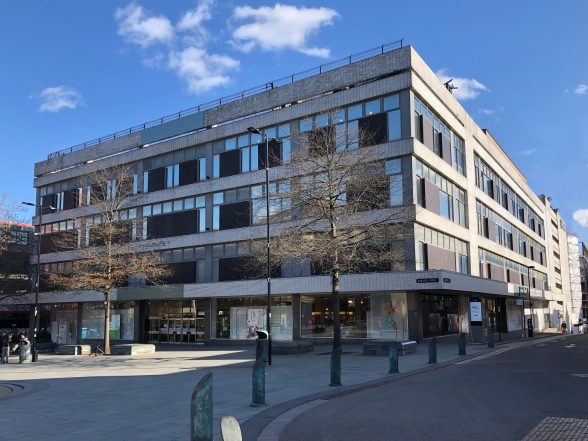
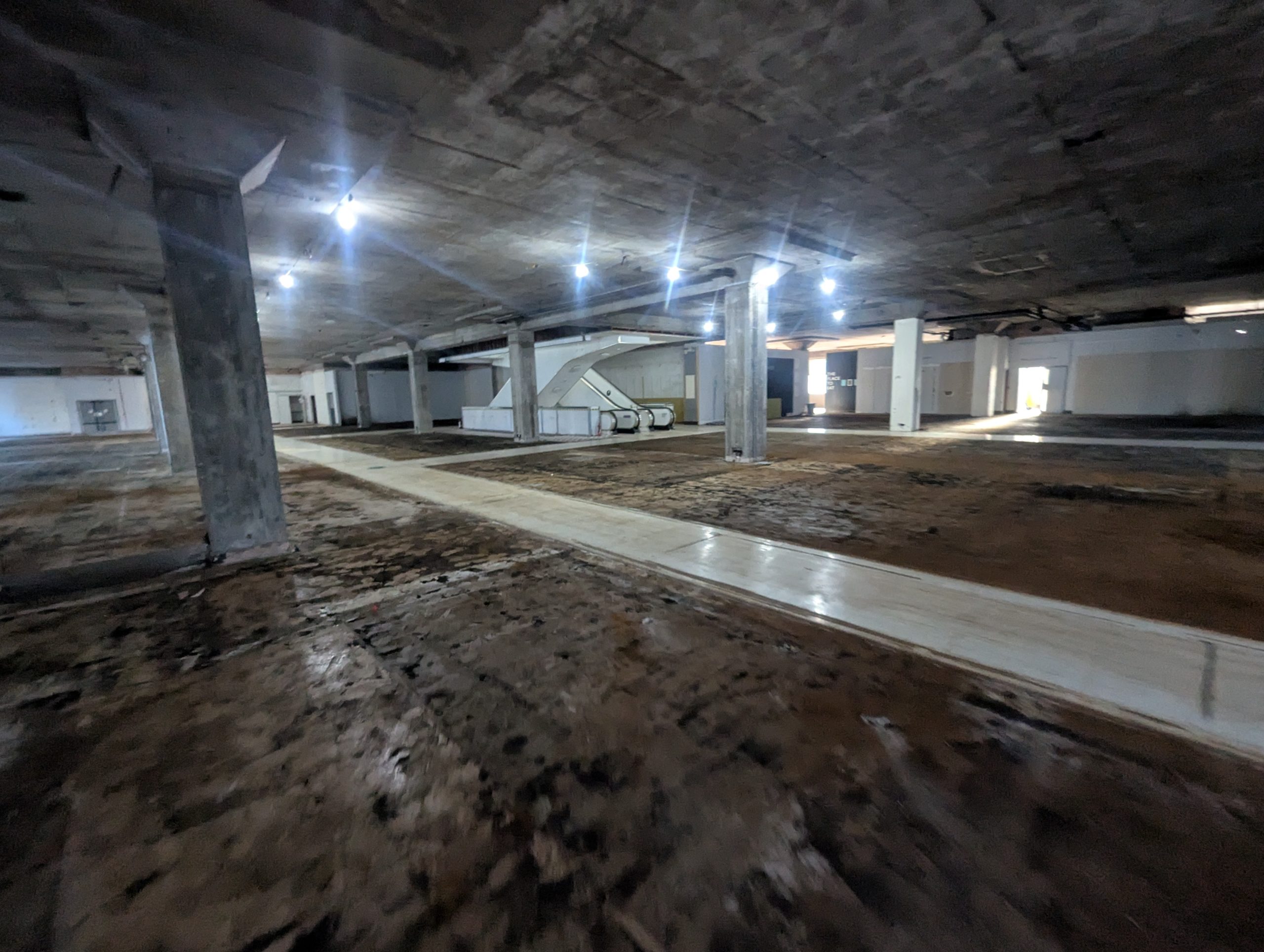
Fourth Wall was instructed by Urban Splash to undertake a detailed condition assessment of the former Cole Brothers / John Lewis building at Barker’s Pool in Sheffield city centre.
The prominent historic commercial building required a clear understanding of existing fabric condition and high-level risks before future regeneration proposals progressed.
Our work combined:
- Detailed building-fabric inspection
- Heritage-informed defect diagnosis
- Drone surveys of roofs, parapets and high-level façades
- Assessment of deterioration mechanisms
- Risk prioritisation
- Strategic advice to support feasibility and future investment planning
The resulting information reduced uncertainty around difficult-to-access parts of the building and provided a stronger technical basis for future design development, cost planning, stakeholder discussions and regeneration strategy.
The project demonstrates an important part of our Pre-Acquisition approach:
Complex buildings need advice that understands not only their present condition, but what that condition means for their next use.
Historic commercial asset | Drone inspection | Building pathology | Regeneration strategy | Future investment
Separate existing defects from future investment
Not every pound of expenditure identified during Technical Due Diligence represents a defect inherited from the vendor.
For an acquisition to be assessed properly, it is important to distinguish between existing repair liabilities, foreseeable lifecycle expenditure and improvements the purchaser may choose to make as part of its own asset strategy.
Without that distinction, headline CAPEX figures can become misleading.
A building may require significant investment after purchase, but the reason for that expenditure matters.
Repair
This is expenditure required to address an existing defect or deterioration in the building.
Examples might include:
- Repairing a leaking roof
- Replacing failed sealants
- Making good damaged cladding
- Repairing defective drainage
- Addressing damaged floor slabs
- Remediating active water ingress
These are usually the clearest examples of existing technical liability.
Lifecycle replacement
Some elements may not yet have failed but could be approaching the end of their useful or economic life.
Examples might include ageing roof coverings, obsolete plant, older lifts or external finishes approaching a major maintenance cycle.
This expenditure may not be immediately necessary, but it should still be understood where it is likely to arise during the purchaser’s intended period of ownership.
Compliance-related expenditure
The due diligence process may identify areas where further specialist review is needed in relation to matters such as fire safety, accessibility, asbestos, electrical systems or other statutory requirements.
A Pre-Acquisition Survey does not certify regulatory compliance, but it should identify material issues or information gaps that warrant further investigation before commitment.
Where specialist advice is required, we make that clear rather than presenting assumptions as confirmed compliance.
Operational expenditure
An owner-occupier may need to alter or upgrade the property simply because the existing building does not meet the requirements of the proposed business.
That might include:
- Additional electrical capacity
- Improved ventilation or cooling
- Loading alterations
- Accessibility works
- Welfare facilities
- Additional security
- Changes to internal layouts
These costs are relevant to the acquisition, even where there is nothing technically defective with the existing building.
Investment and refurbishment expenditure
An investor may choose to undertake works to improve the property rather than merely repair it.
This could include:
- Upgrading reception or common areas
- Improving office specification
- Reconfiguring accommodation
- Replacing dated finishes
- Improving amenity
- Repositioning the asset for a different market
These are investment decisions rather than necessarily inherited defects.
Energy and sustainability improvements
A purchaser may also choose, or ultimately need, to invest in measures intended to improve energy performance or reduce operating carbon.
These might be coordinated with planned lifecycle works, such as replacing ageing plant with more efficient systems or combining roof renewal with insulation or renewable-energy improvements.
The important point is to distinguish the existing technical need from the additional enhancement chosen by the purchaser.
A £500,000 future works programme does not necessarily mean you are buying a building with £500,000 of defects.
Why this distinction matters to the acquisition
Separating these categories helps the purchaser understand:
- What liability already exists within the building
- What expenditure is likely because of age and lifecycle
- What expenditure arises from the proposed use
- What capital is being invested deliberately to improve the asset
- Which items might reasonably influence acquisition negotiations
- Which costs should instead sit within the post-acquisition business plan
For investors, it also creates a much clearer basis for distinguishing Day 1 acquisition risk from value-add CAPEX.
For owner-occupiers, it helps separate the cost of making the building sound from the cost of making it suitable for the business. before exchange or completion can reduce the time available for further investigation, cost assessment and meaningful negotiation.nge.
What does a commercial pre-acquisition survey cover?
A property-specific scope rather than a standard checklist
The scope of a commercial building survey should be tailored to the property, transaction, intended use and information available.
Our inspection and technical due diligence review can include the following areas.
Site and external areas
We assess the visible condition and arrangement of:
- site access and circulation;
- service yards and delivery areas;
- car parks;
- roads and hardstanding;
- external paving;
- boundary walls and fencing;
- gates and access controls;
- retaining walls;
- external steps and ramps;
- surface-water drainage;
- landscaping where relevant;
- ancillary buildings; and
- other external structures.
We also identify apparent constraints that may affect occupation, deliveries, maintenance access, security, adaptation or future development.
Structure and building fabric
We inspect the principal accessible elements of the property, including:
- structural form;
- roof coverings;
- rooflights;
- gutters and rainwater disposal;
- parapets and roof-level details;
- external walls;
- cladding and façade systems;
- windows and external doors;
- loading and service doors;
- internal walls and partitions;
- floors and floor finishes;
- ceilings;
- stairs and circulation areas;
- basements and below-ground accommodation;
- visible dampness and water ingress;
- apparent movement and distortion;
- previous repairs;
- extensions; and
- alterations.
Where visible evidence suggests that specialist structural advice is required, we identify the concern and recommend proportionate further investigation by a structural engineer.
Mechanical and electrical services
The building surveyor will normally undertake a visual review of accessible building services and available records.
Depending on the property and agreed scope, this may include:
- heating and cooling systems;
- electrical installations;
- lighting;
- water services;
- drainage;
- ventilation;
- lifts;
- fire alarms;
- sprinkler systems;
- access-control systems;
- renewable-energy installations; and
- other significant plant.
We identify apparent age, condition, obsolescence, maintenance concerns and potential replacement liabilities.
A visual building survey is not a substitute for specialist testing. For larger or more complex assets, we can coordinate mechanical and electrical consultants as part of the wider technical due diligence team.
Fire, health and safety considerations
Within the limitations of our appointment, we identify visible concerns and documentation gaps relating to matters such as:
- means of escape;
- fire doors;
- fire-stopping;
- compartmentation;
- emergency lighting;
- alarm systems;
- firefighting installations;
- safe access for maintenance;
- guarding and fall protection;
- hazardous areas;
- visible trip and fall risks;
- welfare provision; and
- general occupational safety.
A pre-acquisition survey is not a substitute for a formal fire-risk assessment, fire-engineering review or statutory compliance audit. Where specialist assessment is required, we identify this clearly.
Accessibility and inclusive use
We can provide high-level observations on barriers affecting employees, visitors, customers or service users, including:
- step-free access;
- entrance arrangements;
- door widths;
- circulation routes;
- lifts;
- accessible parking;
- accessible sanitary facilities;
- reception points;
- external routes; and
- general wayfinding.
Where a detailed assessment is needed, we may recommend a separate access audit.
Environmental and energy considerations
Depending on the brief, the survey can identify visible opportunities and constraints relating to:
- building-fabric performance;
- insulation;
- glazing;
- air leakage;
- heating and cooling efficiency;
- lighting;
- controls;
- overheating;
- ventilation;
- renewable-energy systems;
- solar photovoltaic potential;
- drainage and water management;
- climate resilience; and
- future energy improvement works.
This is not a formal energy audit or net-zero assessment unless separately commissioned. It can, however, help identify matters that may affect future investment, minimum energy standards or wider ESG objectives.
External and environmental risks
The report can comment on visible or documented risks affecting:
- flooding and surface-water management;
- ground conditions;
- retaining structures;
- exposed roof and façade systems;
- neighbouring uses;
- site access;
- maintenance constraints;
- trees and vegetation;
- watercourses; and
- apparent contamination or environmental concerns.
Specialist environmental, flood, drainage or geotechnical assessments may be recommended where required.
Technical and property documentation
The survey is most effective when the physical inspection is considered alongside the available technical information.
We may review documents such as:
- planning permissions;
- Building Regulations approvals;
- completion certificates;
- fire-risk assessments;
- fire strategies;
- asbestos information;
- energy performance certificates;
- maintenance records;
- electrical reports;
- gas and plant certification;
- lift inspection records;
- sprinkler and alarm test certificates;
- drainage records;
- roof and cladding warranties;
- operation and maintenance manuals;
- previous condition reports;
- planned maintenance schedules;
- insurance claims information;
- party wall awards;
- rights-of-way information;
- service-charge budgets; and
- Listed Building Consent records.
We identify apparent gaps, inconsistencies and matters that should be referred to the purchaser’s solicitor or specialist advisers.
Legal interpretation remains the responsibility of the legal team.
What will the pre-acquisition report tell you?
Our reports are designed to support commercial decisions rather than simply list defects.
Depending on the agreed scope, the report may include:
Executive risk summary
A concise overview of the most significant findings and their likely effect on the acquisition.
Prioritised defects and actions
Clear differentiation between:
- transaction-critical risks;
- urgent repairs;
- short-term works;
- planned maintenance;
- longer-term lifecycle items; and
- discretionary improvements.
Repair and CAPEX budget
Budget allowances for significant repairs, renewals and replacements over an agreed period.
This may be structured as:
- immediate works;
- year one to two expenditure;
- year three to five expenditure;
- year six to ten expenditure; and
- longer-term liabilities where relevant.
Photographic evidence
Clear photographs illustrating material defects, risks and areas requiring further attention.
Further investigations
Recommendations for proportionate specialist input, testing or opening-up where the building survey alone cannot provide a reliable conclusion.
Legal and vendor enquiries
A schedule of technical matters that should be raised with the vendor, managing agent, freeholder or legal team.
Acquisition implications
Commentary on how particular findings may affect:
- purchase price;
- transaction terms;
- funding;
- insurance;
- occupation;
- refurbishment;
- redevelopment;
- programme;
- future marketability; and
- exit strategy.
Maintenance baseline
A technical starting point for future planned maintenance, asset management and capital budgeting after completion.
Can we coordinate specialist consultants?
Yes.
Commercial technical due diligence often requires input beyond the building surveyor’s core scope.
Depending on the asset and identified risks, we can coordinate specialists including:
- structural engineers;
- mechanical and electrical consultants;
- fire engineers;
- asbestos consultants;
- drainage specialists;
- environmental consultants;
- geotechnical engineers;
- energy and sustainability consultants;
- access consultants;
- façade specialists;
- roofing specialists; and
- heritage consultants.
We can assist with:
- defining the required specialist scope;
- coordinating access;
- reviewing findings;
- integrating advice into the main report;
- identifying overlapping risks; and
- presenting the conclusions in one coherent acquisition strategy.
This avoids the purchaser receiving several disconnected reports without a clear explanation of their combined commercial significance.
How do we assess acquisition risk?
Not every defect has the same commercial significance.
Our reports distinguish between different categories of risk so that decision-makers can focus on what matters most.
Transaction-critical risks
These are issues that may materially affect whether the acquisition should proceed or whether further protection is required.
Examples may include:
- significant structural distress;
- widespread roof failure;
- serious fire-safety concerns;
- inadequate access or servicing;
- major drainage defects;
- apparent harmful materials;
- substantial statutory information gaps;
- insufficient utilities;
- extensive water ingress; or
- fundamental incompatibility with the intended use.
Immediate and short-term CAPEX
These are works likely to arise before occupation or within the first one to two years.
Examples may include:
- roof and cladding repairs;
- replacement plant;
- electrical upgrades;
- fire-safety improvements;
- drainage repairs;
- external decoration;
- resurfacing of yards or access roads; and
- remedial works to doors, windows or façades.
Operational risks
These are issues that may interrupt or constrain the use of the property.
Examples may include:
- roof leaks over operational areas;
- insufficient electrical capacity;
- obsolete heating or cooling;
- inadequate ventilation;
- unreliable lifts;
- poor delivery access;
- damaged hardstanding;
- limited maintenance access; or
- unsuitable welfare facilities.
Strategic risks
These are matters that may affect longer-term plans for the asset.
Examples may include:
- limited subdivision potential;
- low floor loading;
- restricted clear height;
- poor energy performance;
- adaptation constraints;
- listed-building controls;
- difficult servicing arrangements;
- planning limitations; or
- significant future renewal liabilities.
This approach helps separate routine maintenance from matters that should influence the acquisition itself.
Freehold and leasehold commercial acquisitions
The nature of the interest being acquired can significantly affect the required scope.
Freehold acquisition
A freehold purchaser will generally assume responsibility for the structure, fabric, external areas and long-term lifecycle of the asset.
The survey should therefore consider the wider site, major building elements, services, future capital expenditure and strategic suitability.
Long leasehold acquisition
A long leaseholder may still inherit substantial repair, maintenance or service-charge exposure.
The survey should be considered alongside:
- repairing covenants;
- service-charge provisions;
- reserved landlord responsibilities;
- rights of access;
- shared services;
- planned major works; and
- reinstatement obligations.
The legal team should review the lease terms, but the building survey can help identify where technical condition and lease liability intersect.
Occupational lease
A tenant taking a conventional commercial lease will normally require a pre-lease survey rather than a purchaser-focused pre-acquisition survey.
Where the proposed lease includes full repairing and insuring obligations, a carefully prepared Schedule of Condition should also be considered to limit future dilapidations exposure.
ESG reporting as part of Commercial Pre-Acquisition Due Diligence
For many investors, asset managers and corporate occupiers, Technical Due Diligence now needs to inform more than the immediate repair budget.
The acquisition may also need to fit within wider ESG reporting, decarbonisation, responsible investment and portfolio-performance objectives.
Fourth Wall can therefore structure Pre-Acquisition reporting so that significant technical findings are presented in a way that can feed into the purchaser’s wider ESG and asset-management decision-making.
This does not mean turning a building survey into a generic ESG scorecard. It means identifying where the physical condition and future investment requirements of the building have a material environmental, social or governance consequence.
Environmental
The condition of the existing building can directly affect future energy use, carbon expenditure and the amount of material required during ownership.
Relevant findings may include:
- Roof and façade performance
- Insulation and glazing
- Age and efficiency of building services
- Controls and metering
- Existing EPC performance
- Renewable-energy installations
- Opportunities to coordinate repair with energy improvements
- Building elements approaching replacement
- Potential for repair and reuse rather than wholesale renewal
- Significant refurbishment requirements likely to generate embodied-carbon impacts
For example, if a roof requires major works during the proposed hold period, the investment decision may need to consider not only the repair cost but whether that intervention creates an opportunity to improve insulation or accommodate renewable technologies.
Likewise, replacement of ageing plant may represent both lifecycle CAPEX and an opportunity to improve operational energy performance.
The important distinction is between:
the cost of maintaining the asset
and
additional investment intended to improve its environmental performance.
Social
The physical building can also influence the experience, wellbeing and accessibility of the people who use it.
Depending on the asset, our due diligence may highlight matters relating to:
- Accessibility and inclusive use
- Thermal comfort
- Ventilation
- Natural light
- Dampness and water ingress
- Reliability of heating and cooling
- Safe circulation
- Operational disruption from future works
- Condition of staff, customer or community facilities
A general Pre-Acquisition Survey is not a formal social-value or accessibility audit, but it can identify where the physical asset may constrain the purchaser’s wider objectives or where specialist assessment should be commissioned.
This is particularly relevant for offices, schools, healthcare, community and other operational properties, where the consequences of building performance extend beyond financial repair cost.
Governance and asset information
Good ESG reporting also depends on the quality of the information available about the asset.
Technical Due Diligence can identify governance-related gaps such as:
- Missing or outdated EPC information
- Incomplete maintenance records
- Absent asbestos documentation
- Missing fire-safety information
- Unclear responsibility for tenant alterations
- Inadequate PPM information
- Poor records of previous refurbishment
- Missing warranties or guarantees
- Lack of evidence supporting claimed building improvements
These information gaps can make it more difficult for an investor to demonstrate how technical risks are being identified, managed and reported.
Good ESG reporting starts with good asset information. If the condition, remaining life and future requirements of the building are poorly understood, meaningful ESG planning becomes much more difficult.
Turning survey findings into reportable actions
Where ESG considerations form part of the acquisition brief, significant findings can be structured around practical actions rather than broad sustainability statements.
For example:
| Technical finding | Potential ESG implication | Acquisition / asset action |
|---|---|---|
| Ageing gas-fired plant | Energy use and future replacement CAPEX | Consider lifecycle replacement alongside wider decarbonisation strategy |
| Roof approaching major renewal | Embodied carbon, insulation and renewable opportunity | Coordinate repair strategy with thermal and solar feasibility |
| Useful existing fit-out | Waste and embodied carbon | Assess potential retention before automatic strip-out |
| Poor accessibility | Inclusive use and future refurbishment cost | Obtain specialist accessibility review and incorporate into CAPEX |
| Missing energy or maintenance data | Governance and reporting uncertainty | Request information or establish new baseline following acquisition |
| Repeated water ingress | Occupier wellbeing and deterioration | Prioritise investigation and remedial works |
This creates a clearer connection between what the surveyor identifies and what the asset manager needs to report, budget and manage.
Supporting portfolio-level ESG planning
For clients acquiring multiple assets, the same approach can also help create a consistent technical baseline across the portfolio.
Significant findings can be categorised to identify:
- Assets with significant energy-performance risk
- Major near-term lifecycle expenditure
- Opportunities to combine maintenance and decarbonisation projects
- Buildings requiring further specialist ESG assessment
- Information deficiencies requiring resolution
- Opportunities for repair, reuse and retention
- Assets where future capital expenditure may support wider portfolio targets
Following acquisition, these findings can be developed further through our Planned Maintenance Reports, allowing technical repairs, lifecycle expenditure and asset-improvement projects to be considered within a coordinated long-term CAPEX programme.
Your landlord and asset-manager presentation makes the same wider point: ESG reporting can support corporate and investor transparency, while proactive property management creates opportunities to coordinate lifecycle expenditure with improvements across the portfolio.
ESG should inform the investment decision, not sit in an appendix
For us, ESG is most useful when it changes or improves a real property decision.
That might mean:
repairing rather than unnecessarily replacing an element;
coordinating plant replacement with energy improvement;
retaining useful fit-out rather than stripping it out;
identifying an accessibility issue before refurbishment budgets are fixed;
or
recognising that an apparently inexpensive acquisition carries substantial future energy and lifecycle investment.
The objective is not simply to describe the building as sustainable or unsustainable. It is to give the purchaser the technical information needed to understand where condition, CAPEX and ESG strategy intersect.ons exposure.
Does the report include repair costs and CAPEX?
Repair and capital expenditure advice can be included within the agreed scope.
Rather than providing one undifferentiated total, we can separate likely expenditure into meaningful categories.
Immediate works
Repairs or safety measures that should be completed before occupation or shortly after acquisition.
Short-term expenditure
Works likely to arise during the first one to two years.
Medium-term expenditure
Planned repairs, renewals and major maintenance likely to arise within approximately three to five years.
Longer-term lifecycle expenditure
Replacement or renewal of significant elements likely to arise over a five- or ten-year period.
Discretionary improvements
Upgrades that may be commercially beneficial but are not required solely because of the present condition.
Fit-out and alteration costs
These should normally be distinguished from core acquisition liabilities so that the client can understand the difference between essential repairs and planned investment.
Budget figures are provided for acquisition and planning purposes. They are not fixed contractor quotations and may be affected by:
- final specification;
- access;
- scaffolding;
- phasing;
- procurement route;
- local labour and material costs;
- inflation;
- concealed conditions;
- professional fees;
- VAT; and
- the extent of work discovered during opening-up.
The report will explain the basis of the allowances and any assumptions applied.ld influence the acquisition itself.
Sector-specific commercial property surveys
Different property types create different acquisition risks. Our scope is adapted to the asset and intended use.
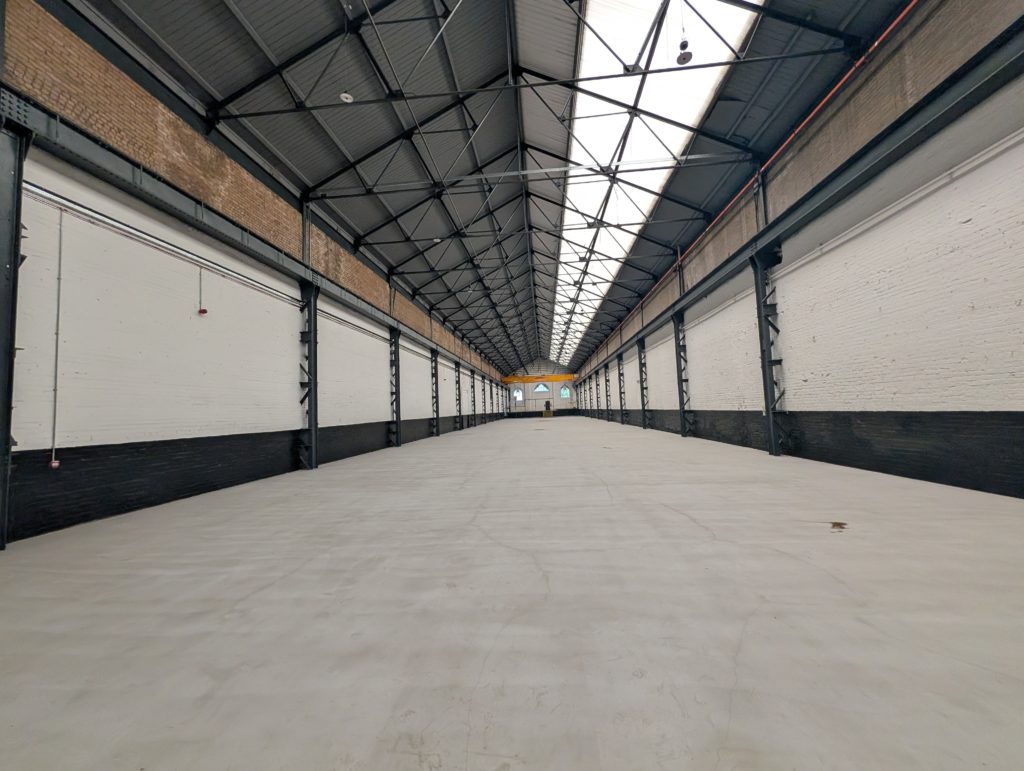
Industrial and logistics property
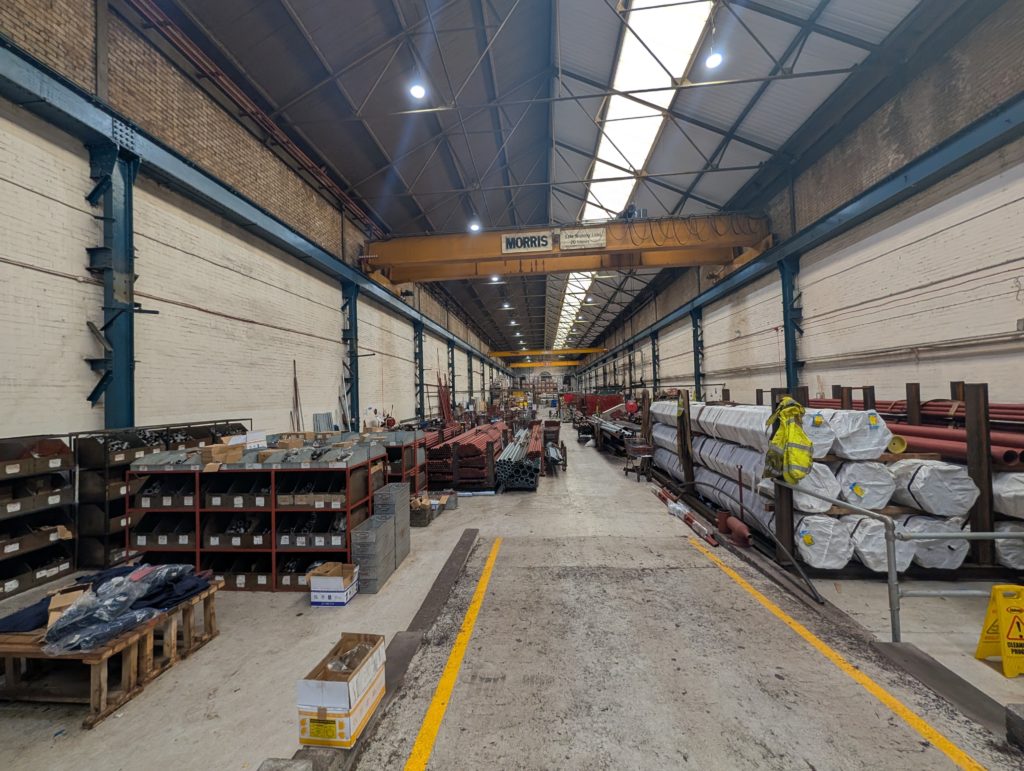
For warehouses, factories and logistics units, we may consider:
- steel portal-frame condition;
- roof and wall cladding;
- cut-edge corrosion;
- rooflights;
- loading and level-access doors;
- dock levellers;
- yards and hardstanding;
- surface-water drainage;
- clear internal height;
- floor condition and apparent loading constraints;
- sprinkler systems;
- electrical capacity;
- solar photovoltaic systems;
- office accommodation; and
- future roof or overcladding liabilities.
Offices
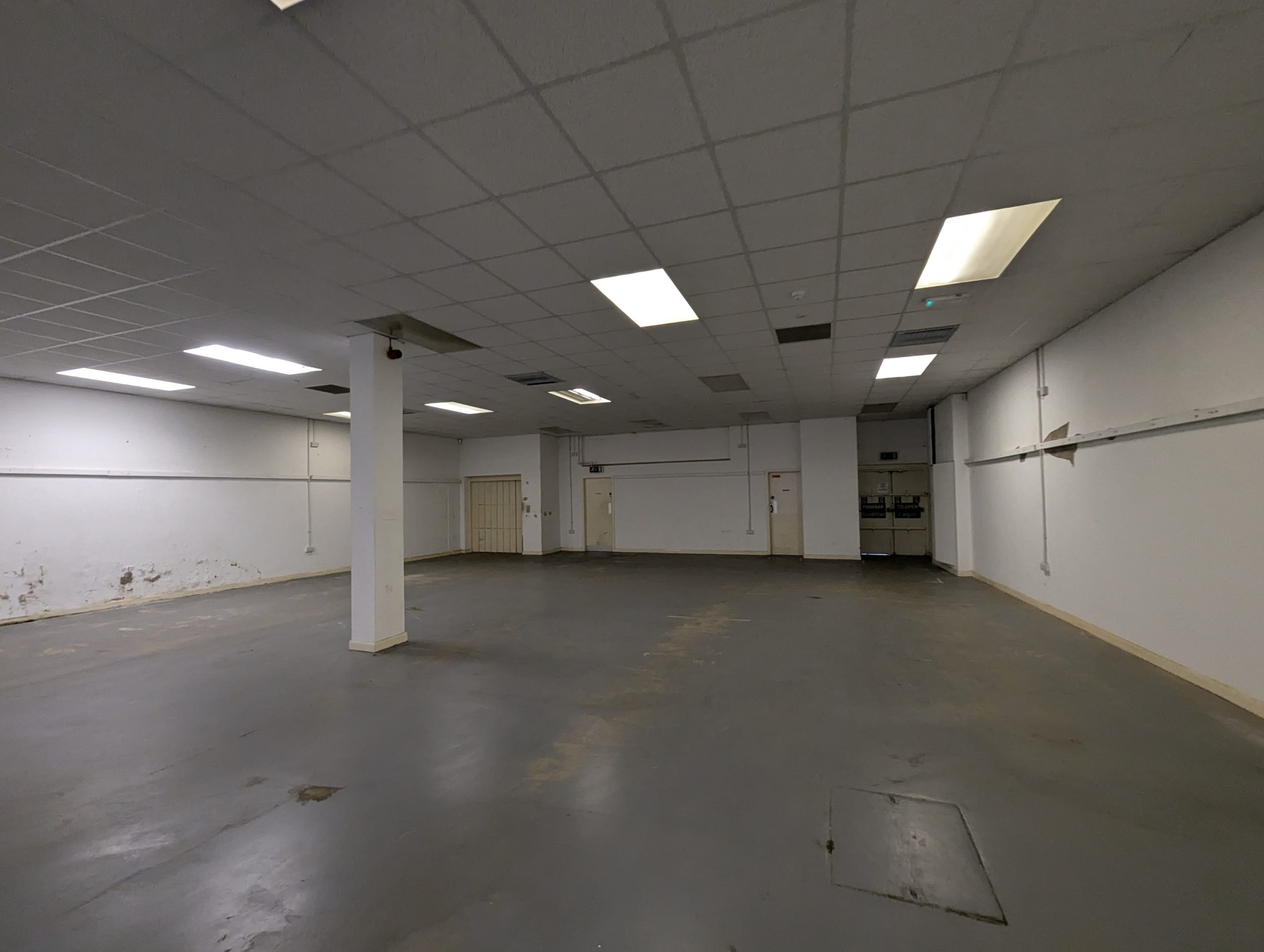
For office buildings, we assess whether the property can continue to support modern occupation without significant unplanned expenditure. This may include the façades and glazing, roofs, HVAC systems, lifts, raised floors, suspended ceilings, fire compartmentation, welfare facilities, accessibility, fit-out, energy performance and subdivision potential.
Common issues include failed glazing, roof and façade leaks, obsolete HVAC, overheating, ageing lifts, poor fire-stopping above ceilings, inadequate electrical capacity, asbestos-containing materials and substantial strip-out requirements.
For multi-let offices, we also consider the condition of common parts, landlord and tenant responsibilities, maintenance records and whether the service-charge budget reflects likely future capital works.
Missing information is itself a due diligence finding
In Technical Due Diligence, uncertainty has value.
A missing document does not automatically mean there is a defect, but it can materially reduce the purchaser’s ability to understand condition, remaining life, legal responsibility, warranty protection or future cost exposure.
For that reason, we do not treat missing information as a simple administrative gap.
We ask:
What does the missing information prevent us from confirming?
How material is that uncertainty to the acquisition?
Can it be resolved before exchange?
If it cannot, what residual risk is the purchaser accepting?
No roof warranty or guarantee
This does not prove that the roof is defective.
However, where a recently installed or overlaid roof is being presented as relatively new, the absence of supporting warranty information can be important.
We may need to establish:
- When the works were carried out
- Who completed them
- What system was installed
- Whether any guarantee exists
- Whether the guarantee is transferable
- Whether maintenance conditions have been complied with
- Whether previous leaks or repairs have occurred
Where the roof represents significant future CAPEX, lack of documentation may justify further investigation before acquisition.
No evidence of previous major works
A building may contain an extension, structural alteration, roof replacement, façade works or substantial refurbishment without adequate technical records being available.
That creates questions around:
- Design
- Materials
- Construction quality
- Approval
- Warranties
- Maintenance
- Previous defects
The legal status of the works should be considered by the purchaser’s solicitor.
Our concern is whether the absence of information creates a technical risk that needs further investigation.
No asbestos information
For non-domestic property, missing or inadequate asbestos records can be material, particularly where the purchaser intends refurbishment or intrusive works.
The absence of information should not be interpreted as confirmation that asbestos-containing materials are absent.
Where appropriate, specialist asbestos advice should be obtained before planned works.
Further information is available from the Health and Safety Executive’s guidance on managing asbestos in non-domestic premises.
No M&E maintenance or service records
Plant can appear operational during a short inspection while its maintenance history remains unknown.
Where servicing information is unavailable, it may be difficult to establish:
- Whether maintenance has been undertaken correctly
- Whether major components have already been replaced
- Whether known defects exist
- Whether recommended works remain outstanding
- Whether equipment has been operating beyond normal maintenance cycles
For larger or more technically complex assets, this can strengthen the case for specialist MEP Technical Due Diligence before purchase.
No evidence supporting previous leak repairs
The vendor may advise that historic water ingress has been resolved.
If significant staining, deterioration or previous patch repairs remain visible but no investigation or repair records are available, we cannot simply assume that the underlying defect has been permanently addressed.
The appropriate response may include:
- Further enquiries
- Review of contractor information
- Moisture investigation
- Specialist roof inspection
- Opening-up
- Monitoring evidence
The objective is to distinguish between a resolved historic problem and an unresolved recurring defect.
Missing fire-safety information
Where relevant fire documentation is absent, incomplete or materially outdated, this can create significant uncertainty for the purchaser.
Depending on the building, this may relate to:
- Fire Risk Assessments
- Fire strategy
- Compartmentation
- Fire doors
- Alarm systems
- Smoke control
- Sprinklers
- External-wall information
A Pre-Acquisition Survey does not certify fire compliance, so where the information gap is material we may recommend specialist fire advice before commitment.
Missing alteration and tenant information
For tenanted investments, absence of Licences for Alterations, approved drawings or other records can make it difficult to establish:
- What the tenant has changed
- Whether the landlord approved it
- Who maintains the alteration
- Whether reinstatement may be required
- Whether the works have affected structure, services or fire compartmentation
This can have implications for both current condition and future landlord dilapidations.
Outdated information can be as problematic as missing information
A document being present does not mean it remains reliable.
Examples might include:
- An old asbestos survey following later refurbishment
- A historic roof report preceding several years of further deterioration
- A PPM schedule that has not been updated following major works
- An EPC that no longer reflects alterations to the building
- Plant schedules that do not match the installations on site
Technical Due Diligence should therefore consider currency and relevance, not merely whether a file exists.
We turn information gaps into clear acquisition actions
Where significant information is missing, our report does not simply state “not provided” and move on.
We identify why the information matters and recommend an appropriate next step.
That might be:
Obtain before exchange
Where the information is sufficiently important that the purchaser should reasonably seek clarity before becoming contractually committed.
Request clarification from the vendor
Where further explanation or supporting evidence may resolve the uncertainty.
Refer to the purchaser’s solicitor
Where the issue relates to title, statutory documentation, leases, warranties or contractual protection.
Commission further technical investigation
Where physical inspection or specialist testing is the more reliable way of resolving the question.
Seek commercial protection
Where the uncertainty cannot be fully resolved, the purchaser and its advisers may consider whether the issue should influence price, contract terms, retention, warranty or another commercial mechanism.
Accept the residual risk
Some gaps cannot practically be eliminated.
The important point is that the purchaser understands what is unknown and what accepting that uncertainty could mean.
The absence of evidence is not necessarily evidence of a defect. But where that missing evidence prevents the purchaser from understanding a material risk, it belongs in the acquisition decision.
Due diligence is partly about reducing uncertainty
Not every technical question can be answered completely before purchase.
The purpose of Technical Due Diligence is therefore not to promise absolute certainty. It is to reduce uncertainty to a level at which the purchaser can make an informed commercial decision.
Where uncertainty remains, we make it visible rather than burying it within the limitations section of the report.
That is a significant distinction.
A restricted roof inspection, missing plant records or undocumented alteration should not disappear into small print if it could materially affect future expenditure.
Material uncertainty is itself a transaction risk.
How long does a commercial pre-acquisition survey take?
The inspection and reporting period will depend on:
- property size;
- construction;
- number of buildings;
- site extent;
- complexity;
- occupancy;
- access;
- available records;
- required specialists;
- reporting format; and
- transaction programme.
A small retail or office unit may be inspected within part of a day. A large warehouse, school, care facility, multi-let office, mixed-use estate or complex historic property may require a full day, several surveyors, multiple visits or specialist inspections.
We will confirm the proposed programme within our quotation.
Where the transaction is moving quickly, early engagement is important. It allows time to agree access, obtain documents, coordinate specialists and complete the necessary analysis before exchange or completion.
Technical Due Diligence for tenanted investment property
Buying a tenanted commercial property means acquiring both the physical building and the consequences of the occupational structure sitting around it.
A defect that represents a direct landlord CAPEX liability in one acquisition may be the tenant’s repairing responsibility in another. Equally, a tenant may have a broad repairing covenant on paper but that does not necessarily mean the purchaser can assume every future cost will be recoverable.
For investment acquisitions, we therefore consider the building condition alongside the available lease and property information so the purchaser can understand where technical risk is likely to sit after completion.
Who is responsible for what?
From a building-surveying perspective, we consider the physical implications of matters such as:
- The extent of the tenant’s demise
- Landlord-retained structure and common parts
- Responsibility for roofs, façades and external areas
- Repair and decoration obligations
- Existing Schedules of Condition
- Tenant alterations and Licences for Alterations
- Service-charge arrangements
- Existing maintenance responsibilities
- Known defects and previous repair works
Your solicitor remains responsible for the legal interpretation of the lease.
Our role is to help translate that legal framework into the actual building being acquired.
A lease may say who is responsible for the roof. The survey tells you what condition that roof is in and what that responsibility could mean financially.
Is the tenant actually maintaining the property?
The existence of a repairing covenant does not mean the building is being properly maintained.
During inspection we may identify:
- Deferred repairs
- Active leaks
- Poor-quality tenant works
- Deterioration to roofs or cladding
- Damage to slabs or loading areas
- Inadequate maintenance of plant
- Unauthorised alterations
- Evidence that defects have been allowed to develop over time
For the purchaser, this can raise a second question beyond condition:
Is the existing occupational arrangement effectively protecting the asset?
Where significant tenant disrepair is evident, this may need to be considered with the seller, managing agent and legal team before acquisition.
What happens at the next lease event?
A strong investment survey should look beyond the income being received today.
We also want to understand whether significant breaks, expiries or renewals fall within the proposed investment period.
A lease expiry may create:
- Potential dilapidations recovery
- Reinstatement requirements
- Landlord refurbishment expenditure
- A void period
- Cat A works
- Energy upgrades
- Reletting expenditure
- Major lifecycle works coinciding with vacancy
That can materially change the apparent economics of the acquisition.
For further guidance on lease-end liabilities, see our Commercial Dilapidations Surveyors and Landlord Dilapidations services.
Are tenant alterations helping or creating future liability?
Alterations can add value, but they can also create uncertainty.
We may identify:
- Mezzanines
- Additional offices
- Racking installations
- Roof penetrations
- HVAC alterations
- Extraction systems
- Additional electrical installations
- Structural alterations
- Changes to fire compartmentation
- Modified loading arrangements
The important due diligence questions include:
Were the alterations documented?
Who maintains them?
Are there obvious defects?
Will they need to be reinstated?
Do they suit the next letting if the tenant leaves?
The legal position should be reviewed by the purchaser’s solicitor against the relevant Licences for Alterations and lease documentation.
Can the landlord really recover the future expenditure?
Service-charge or tenant-repair provisions can materially affect the investment case, but recoverability should not simply be assumed.
A survey may identify a major roof, façade or M&E liability, but the commercial significance depends on matters such as:
- Who is contractually responsible
- Whether the cost is potentially recoverable
- Existing service-charge mechanisms
- Relevant exclusions or caps
- Schedules of Condition
- Lease expiry dates
- Tenant covenant strength
- Whether the expenditure relates to repair or landlord improvement
The solicitor should advise on legal recoverability. We provide the technical scope, condition and likely cost context that allows that advice to be applied meaningfully.
Multi-let property needs a different approach
For multi-let offices, retail schemes and estates, the landlord may retain responsibility for significant parts of the asset, including:
- Structure
- Roof
- Façades
- Common areas
- Lifts
- Central plant
- Estate roads
- External areas
- Shared services
In these acquisitions, the current service-charge budget should be considered alongside actual building condition.
A low historic service charge can look attractive but may simply indicate deferred maintenance rather than an efficiently managed asset.
Where significant expenditure is foreseeable, the purchaser should understand whether it has been:
- Properly budgeted
- Reflected in existing PPM information
- Communicated to tenants
- Allowed for within the investment model
The key question is not simply “is the property let?”
It is:
Does the combination of building condition, lease structure, tenant covenant and forthcoming lease events support the investment assumptions?
That is why our Technical Due Diligence for investment property considers the physical asset alongside the occupational context, while working with the purchaser’s solicitor, agent and other advisers to build a more complete picture of the acquisition.
Request a Pre-Acquisition Survey QuoteSocial value and responsible commercial property acquisition
Technical Due Diligence increasingly needs to consider more than condition, defects and repair cost.
The buildings investors and organisations acquire affect the people who occupy them, the communities around them and the resources required to keep them operational over the coming decades.
For some purchasers, social value, wellbeing and responsible asset stewardship therefore form part of the acquisition decision alongside financial return and technical risk.
Fourth Wall does not treat this as a generic ESG scoring exercise.
Instead, where relevant to the client’s objectives, we consider how the physical building and its future investment requirements could support — or constrain — wider social and environmental outcomes.
RICS similarly identifies health and wellbeing as an increasingly important part of the Social element of ESG and highlights the role buildings can play in supporting the people who use them. Read the RICS guidance on healthy buildings.
How can social value form part of Pre-Acquisition Due Diligence?
The appropriate considerations depend on the property and purchaser, but they may include the following.
Health, wellbeing and the occupier experience
A technically functioning building is not necessarily a good environment in which to work, learn or operate.
Depending on the asset, due diligence may identify issues associated with:
- Natural light
- Ventilation
- Thermal comfort
- Dampness and water ingress
- Poorly performing windows
- Access to external space
- Building condition affecting user experience
- Ageing environmental-control systems
- Areas requiring further indoor-environment assessment
A Commercial Pre-Acquisition Survey is not a formal wellbeing certification, but it can identify physical characteristics that should influence the purchaser’s future asset strategy.
For operational properties such as schools, offices, healthcare premises and community buildings, these considerations can be particularly important.
Accessibility and inclusive use
Existing commercial property can contain physical barriers that affect how readily different people can use the building.
During Technical Due Diligence we may identify obvious issues relating to matters such as:
- Entrance arrangements
- Changes in level
- Circulation
- Steps and ramps
- Doorways
- Accessible facilities
- Parking and external approaches
Our general building survey does not constitute a detailed Equality Act or accessibility audit.
However, where the purchaser intends significant occupation, refurbishment or public use, we can identify where specialist accessibility advice should form part of the acquisition or subsequent design process.
Operational continuity
For an occupied asset, social value can sometimes be as practical as ensuring that the building continues to serve the people who depend upon it.
A major roof failure, heating-system replacement or drainage problem has very different implications at:
- A school
- A healthcare setting
- A workplace
- A community facility
- An operational industrial site
Our advice therefore considers not just what needs repairing, but where foreseeable works could cause disruption and whether they can be planned around the organisation’s operational requirements.
This was a particularly important consideration in our Eton End School Pre-Acquisition Survey, where safeguarding, operational continuity and future capital planning formed part of the acquisition brief.
Reuse existing buildings before replacing them
Acquisition can create an opportunity to extend the useful life of an existing building rather than automatically replace it.
Technical Due Diligence can help establish:
- What is genuinely defective
- What can reasonably be repaired
- Which elements still have useful service life
- What expenditure is required to extend that life
- Which areas could be adapted
- Where improvement can be coordinated with lifecycle replacement
This is particularly important when considering older or historic buildings.
Rather than assuming that age automatically equals liability, we assess the actual condition and help the purchaser understand whether repair, adaptation and continued use offer a viable route.
Where the property is historically significant, our Heritage Consultancy expertise can be incorporated into the wider acquisition strategy.
Heritage and place
Some buildings contribute social value simply through the role they play within a place.
Historic commercial buildings, former civic buildings, schools, industrial heritage and prominent town-centre assets can carry significance beyond their investment value.
That does not mean they should be acquired irrespective of cost.
It means that Technical Due Diligence needs to understand the implications of traditional materials, conservation requirements and future adaptation properly rather than applying a standard modern-building repair strategy.
Our work on the Coles Building in Sheffield demonstrates this approach, combining condition assessment and high-level drone inspection with advice intended to support the future regeneration of a significant city-centre asset.
Connecting social value with future CAPEX
Social and environmental objectives become much more useful when they are linked to actual investment decisions.
For example:
Ageing heating plant needs replacing.
Could the lifecycle replacement also improve energy performance and occupier comfort?
The roof requires major works.
Should insulation, renewable energy or other improvements be investigated at the same intervention point?
Internal fit-out is approaching replacement.
Can existing elements be retained or reused rather than stripped out automatically?
Accessibility is poor.
Can planned refurbishment address the issue more efficiently than a separate future project?
This allows the purchaser to distinguish between:
repair expenditure
and
capital that can simultaneously improve the long-term performance and usefulness of the asset.
Our Planned Maintenance Reports can subsequently help develop these requirements into a structured longer-term investment programme.
Social value should be asset-specific
There is no credible universal checklist that determines whether a commercial property delivers “good social value”.
A logistics warehouse, city-centre office, school and listed town-centre building all interact with people and place differently.
Knight Frank’s investor research highlights this challenge: although more than three-quarters of respondents considered social value when making investment decisions, fewer than half had a framework for measuring it.
Our approach is therefore to understand what matters to the purchaser and the asset, and ensure the technical due diligence provides evidence that can support those wider objectives.
Where a formal social-impact assessment, ESG benchmark, energy model or certification is required, that should be separately scoped with the appropriate specialist.
Responsible acquisition is not about adding an ESG paragraph to the end of a building survey. It is about understanding how the condition, investment needs and future use of the asset can support the people who occupy it and the strategy of the organisation buying it.
For further independent guidance, the Better Buildings Partnership Acquisitions Sustainability Toolkit provides a current framework for considering sustainability risks and opportunities through the commercial-property acquisition process.
Commercial pre-acquisition survey FAQs
A commercial property survey is not generally compulsory, but purchasing without appropriate Technical Due Diligence means accepting the building and many of its associated technical risks without an independent assessment.
A Pre-Acquisition Survey can identify significant defects, deferred maintenance, future capital expenditure, missing technical information and matters requiring specialist investigation before you become responsible for the property.
For larger acquisitions, the potential cost of an unidentified roof, cladding, drainage or building-services problem can substantially exceed the cost of obtaining appropriate advice before purchase.
For most commercial property purchases, the appropriate starting point is a Commercial Pre-Acquisition Building Survey or Technical Due Diligence assessment.
The scope should reflect the asset and the transaction.
A relatively straightforward owner-occupied industrial unit may require a detailed building-fabric survey with repair-cost advice. A multi-let investment property may require coordinated assessment of the fabric, MEP services, leases, fire information, energy performance and foreseeable CAPEX.
RICS specifically states that Technical Due Diligence should be tailored to the client’s brief and the particular property rather than treated as a standardised service.
A Commercial Pre-Acquisition Survey is a detailed technical assessment of a property undertaken on behalf of a prospective purchaser.
It considers the condition of the building, significant defects, foreseeable repair and replacement expenditure, technical documentation and matters requiring further investigation.
The purpose is not simply to produce a list of defects. It should help answer:
What are we buying? What is likely to cost us money? What requires further investigation? And does anything materially affect the acquisition?
Broadly, yes.
Technical Due Diligence (TDD) is the term commonly used within the commercial property industry, particularly for larger investment transactions.
RICS also recognises terms including building survey, building condition inspection and pre-acquisition survey for this type of work.
The scope is more important than the title of the report.
They are frequently used to describe substantially the same purchaser-side service.
However, Pre-Acquisition Survey or Technical Due Diligence better reflects our approach because the investigation considers more than physical condition. It can also consider CAPEX, technical documentation, occupational context, specialist investigations and what the findings mean for the transaction.
Usually, Commercial Building Survey or Technical Due Diligence is the correct terminology.
RICS specifically advises that the term “structural survey” should not be used for general commercial Technical Due Diligence.
A Chartered Building Surveyor will consider visible structural elements and signs such as cracking, movement, corrosion and deflection as part of the wider survey.
Where a particular concern requires calculations, opening-up or engineering analysis, we recommend specialist input from a Structural Engineer.
As early as reasonably possible during the acquisition due-diligence period and before becoming contractually committed.
Early instruction leaves time to investigate significant findings, obtain specialist advice, request missing information, develop cost allowances and raise relevant matters with the vendor and your solicitor.
Leaving the survey until shortly before exchange can mean identifying an important issue without sufficient time to understand it properly.
The cost depends on the building and required scope rather than simply its floor area or purchase price.
Factors include the size and type of property, construction, number of buildings, age, occupancy, roof access, extent of technical documentation, cost advice required, specialist consultant involvement and transaction timetable.
A 20,000 sq ft single-storey warehouse can require a very different level of investigation from a 20,000 sq ft multi-let historic office building.
Send us the property particulars and transaction timetable and we can provide a clear scope and fee.
There is no useful standard inspection time for commercial property.
A straightforward commercial unit may require a single site visit, whereas a large industrial facility, multi-storey investment or multi-building estate can require significantly more time, specialist access and several technical disciplines.
We programme the inspection around the actual asset rather than applying a residential-style two- or three-hour inspection model.
Turnaround depends on the property, reporting scope, available documentation and whether specialist investigations are involved.
We agree the reporting programme at quotation stage around your acquisition timetable.
Where appropriate, we can also provide early red-flag feedback on material findings before the complete report is issued, allowing significant transaction issues to be investigated quickly.
The purchaser will normally appoint and pay for its own Commercial Pre-Acquisition Survey.
This ensures the surveyor’s instruction is based on the purchaser’s intended use, investment strategy and particular concerns rather than relying solely on information commissioned by the vendor or lender.
Potentially, although requirements vary between lenders and transactions.
A lender may commission a valuation and sometimes additional technical investigations, but that does not necessarily provide the same level of advice as purchaser-side Technical Due Diligence.
You should establish exactly what the lender is commissioning and whether you can rely upon it before deciding that a separate purchaser survey is unnecessary.
No.
A commercial mortgage valuation is principally concerned with value and the property’s suitability as lending security.
A Pre-Acquisition Survey investigates the physical building, defects, repair liabilities, foreseeable CAPEX and technical risks.
A valuation may make reference to obvious defects that affect value, but it should not automatically be treated as a substitute for detailed Technical Due Diligence.
The precise scope should be tailored to the property, but it can include assessment of:
Roofs and rooflights
External walls and cladding
Visible structure
Windows and doors
Internal fabric
Dampness and water ingress
Floors and industrial slabs
Loading facilities
Yards and hardstanding
Drainage
External areas
Visible building services
Previous alterations
Available technical documentation
Significant future repair and lifecycle expenditure
Specialist systems and concealed elements may require further investigation.
es, where access can safely and reasonably be achieved.
For many commercial properties, particularly warehouses and industrial units, the roof is one of the most important parts of the Technical Due Diligence because repairs or replacement can represent substantial future CAPEX.
Where conventional access is insufficient, we can consider alternative inspection methods such as elevated access or drone surveying.
If a material area cannot be inspected, we identify that limitation and explain what further investigation may be appropriate rather than simply burying it within the report limitations.
Our building survey can provide visual observations on readily accessible mechanical and electrical installations, but this should not be confused with specialist MEP Technical Due Diligence, testing or engineering assessment.
For larger, older or more technically complex buildings, Fourth Wall works with several specialist MEP consultancies committed to our expected service and reporting standards.
We remain the single point of contact, coordinating specialist findings with the building-fabric survey, CAPEX assessment and wider acquisition advice.
Budget costs for significant repair and replacement items can be included where agreed within the scope.
We generally concentrate on expenditure capable of influencing the transaction or business plan rather than attempting to price every minor cosmetic defect.
The advice can distinguish between immediate repairs, short-term expenditure, medium-term lifecycle works and longer-term capital liabilities.
Where detailed project costing is required, further Quantity Surveying, specification or tender work may be recommended.
Yes, where required.
The appropriate timeframe should reflect the purchaser’s intended ownership or investment strategy.
For example, a five-year investor may need particular visibility of roof, cladding and plant expenditure falling within that hold period, while an owner-occupier may require a longer lifecycle view.
Where the client needs detailed year-by-year expenditure planning, the findings can subsequently be developed into a Planned Maintenance Report.
CAPEX means capital expenditure.
In Technical Due Diligence, it generally refers to significant expenditure that may be required after acquisition on repair, renewal or major building works.
This might include roof renewal, façade repairs, plant replacement, lift works, floor-slab repairs or major external works.
Understanding CAPEX allows the purchaser to consider the real cost of ownership alongside the purchase price.
Yes. Where Technical Due Diligence identifies significant unexpected defects or future expenditure, the purchaser may decide that the findings should form part of its commercial negotiations.
Possible outcomes include vendor repairs, further investigation, adjustment to the purchase price, contractual protection or simply incorporating the expenditure into the acquisition business plan.
Our role is to establish the technical position, significa;nce and likely cost. The purchaser and its transaction advisers determine the commercial negotiation strategy.
A major defect does not automatically mean that you should withdraw from the acquisition.
The appropriate response might be to:
investigate further, obtain specialist advice, establish the cost, ask the vendor to undertake works, renegotiate the commercial terms, obtain suitable legal protection or knowingly accept the liability within the business plan.
Occasionally, the combination of cost, uncertainty and risk means that the acquisition no longer makes commercial sense.
The survey should help you make that decision rather than simply label the issue as “serious”.
The answer depends on the asset, but significant acquisition risks commonly arise from expensive or difficult-to-access elements rather than minor internal defects.
Examples include major roof deterioration, defective cladding, structural concerns, ageing building services, significant water ingress, deteriorated floor slabs or external areas, extensive undocumented alterations, fire-safety information gaps and substantial deferred maintenance.
The importance of each issue depends on extent, cost, timing and the purchaser’s proposed use or hold period.
The precise request should be tailored to the building, but material technical information may include construction drawings, O&M manuals, roof warranties, previous surveys, PPM reports, asbestos records, fire information, EPCs, M&E service records, lift reports, façade reports, structural information and details of significant previous works.
For tenanted investments, leases, Schedules of Condition, Licences for Alterations and relevant service-charge or maintenance information can also be important.
Our due diligence review identifies not simply what has been provided, but what important information appears to be missing.
Missing information does not automatically establish that there is a defect.
It can, however, increase uncertainty.
For example, missing roof information may make it harder to establish the specification, age or warranty protection of recent works. Missing plant records can make maintenance history and remaining service life more difficult to assess.
Where the gap is material, we explain why it matters and recommend an appropriate action, such as further vendor enquiries, physical investigation, specialist review or consideration of the residual acquisition risk.
A general Commercial Building Survey is not an asbestos survey.
We can review available asbestos information and identify where appropriate specialist investigation should be obtained.
The HSE confirms that Regulation 4 of the Control of Asbestos Regulations places duties relating to asbestos management on those with responsibility for maintenance or repair of non-domestic premises.
Where refurbishment is proposed, the suitability and scope of the available asbestos information should be considered carefully.
Read HSE guidance on asbestos in non-domestic premises
The survey may review available fire information and identify visible concerns or information gaps, but a Commercial Building Survey does not certify fire-safety compliance.
Depending on the property, specialist advice may be required in relation to matters such as fire strategy, compartmentation, doors, alarms, suppression systems or external-wall construction.
Where the risk warrants it, we can help coordinate specialist fire consultants alongside the wider Technical Due Diligence.
Accessible drainage components and visible indications of defects can be considered as part of the inspection.
However, underground drainage cannot generally be fully assessed from a visual building survey.
Where there is evidence of failure, repeated blockage, subsidence, poor drainage performance or other concerns, we may recommend a specialist CCTV drainage survey before acquisition.
The surveyor may review available technical documentation and identify alterations or construction that warrant further enquiry, but formal legal and statutory due diligence is generally undertaken by the purchaser’s solicitor.
Where substantial alterations are apparent, we may recommend that your solicitor obtains the relevant planning, Building Regulations, completion, warranty or other documentation.
We concentrate on the technical significance of the works, while your solicitor advises on their legal and statutory status.
Yes, energy information can form part of the wider Technical Due Diligence where relevant, particularly for investment property.
An EPC is generally required when commercial premises are sold or rented, subject to specified exemptions.
For relevant privately rented non-domestic property in England and Wales, the current MEES regime generally requires an EPC rating of E or above or a valid registered exemption.
The government has also published proposals for strengthening future non-domestic MEES requirements, so investors should consider energy performance as a forward-looking asset risk, not simply a Day 1 compliance question.
A Pre-Acquisition Survey is not a specialist energy audit, and detailed modelling should be commissioned separately where required.
We can consider the building’s physical condition and obvious technical characteristics against the proposed use.
For an owner-occupier this might highlight matters relating to loading, access, floor construction, power, ventilation, cooling, drainage, internal configuration or anticipated refurbishment.
However, specialist planning, engineering, fire, accessibility, licensing or regulatory advice may also be required depending on the proposed use.
We identify where those additional workstreams should form part of the acquisition due diligence.
Yes.
If refurbishment or alteration forms part of the acquisition strategy, the existing building should be considered against those proposals during the due-diligence process.
This can help identify potential constraints, areas requiring further investigation and opportunities to coordinate required repair with planned improvements.
Following acquisition, Fourth Wall can separately assist with Project Management and Contract Administration where required.
Yes.
For an investment acquisition, the condition of the building needs to be considered alongside the occupational structure.
A significant repair liability may remain directly with the landlord, sit with a tenant or potentially be recoverable through other mechanisms depending on the lease.
Our role is to establish the physical condition and technical implications. Your solicitor advises on the legal interpretation of the leases.
For wider landlord-and-tenant liabilities, see our Commercial Dilapidations Surveyors service.
In addition to legal and investment due diligence, understand:
The condition of landlord-retained elements
Significant current tenant disrepair
Repair responsibilities
Schedules of Condition
Tenant alterations
Forthcoming breaks and expiries
Major lifecycle expenditure
Service-charge budgets
Potential post-expiry refurbishment
A property can produce attractive income today while still carrying substantial landlord CAPEX or lease-event exposure during the proposed hold period.
The important question is whether the combination of building condition, leases and future expenditure supports the investment assumptions.
Yes.
Industrial and logistics property is a significant part of our commercial Technical Due Diligence work.
Particular areas of focus can include large roof areas, rooflights, cut-edge corrosion, composite cladding, rainwater systems, floor slabs, loading doors, dock equipment, yards, drainage, tenant alterations and building services.
Small differences in the scope or cost of repair can become material when applied across large roof, floor and external areas.
Yes.
Office Technical Due Diligence can include the building envelope, roofs, common areas, visible structure, internal fabric and external areas, together with specialist MEP assessment where appropriate.
For multi-let investments, we may also consider landlord-retained services, lifts, tenant fit-out, upcoming lease events, potential Cat A works and foreseeable refurbishment expenditure.
It can still be worthwhile.
Newer buildings can contain construction defects, incomplete works, drainage issues, maintenance problems or missing documentation.
A recently refurbished property may also involve warranties, guarantees, contractor information and new building systems that require review.
The scope can be adjusted to reflect the age and circumstances of the asset rather than applying unnecessary investigation designed for an older building.
Yes.
Historic and listed buildings require additional understanding of traditional construction, previous interventions and the constraints affecting future repairs or alteration.
Apparently straightforward replacement can be more complicated where heritage significance, listed-building consent or traditional materials are involved.
Fourth Wall has dedicated heritage and conservation expertise, allowing this to be integrated with the wider commercial acquisition advice where appropriate.
Yes.
For multiple assets, we can develop a consistent inspection, reporting, risk-rating and CAPEX methodology so that findings can be compared across the portfolio.
The scope can also be structured around transaction priorities, allowing the client to identify which assets contain the greatest immediate technical risks and future expenditure.
For portfolio transactions with compressed programmes, we recommend agreeing the methodology and specialist workstreams as early as possible.
It depends on the asset and findings.
Technical Due Diligence can potentially require input from specialists including MEP consultants, Structural Engineers, fire consultants, asbestos consultants, environmental specialists, drainage contractors, energy advisers, façade specialists and lift consultants.
RICS emphasises that TDD services should be tailored to the brief and that surveyors should work within their areas of competence.
Where specialist assessment is required, Fourth Wall can help coordinate the workstreams and remain the single point of contact for the wider technical due-diligence process.
They answer different questions.
A Pre-Acquisition Survey asks:
Should we buy this property and what technical liabilities are we taking on?
A Planned Maintenance Report asks:
How should we repair, maintain and budget for this property once we own it?
Technical Due Diligence may identify significant future expenditure, while a Planned Maintenance Report develops this into a more detailed programme of future works and CAPEX.
A Pre-Acquisition Survey is primarily for a purchaser acquiring the property or investment.
Its central question is:
What building and future CAPEX risks are we acquiring?
A Pre-Lease Survey is primarily for a commercial tenant taking a lease.
Its central question is:
What condition and repair liabilities are we agreeing to take on?
If you are leasing rather than purchasing, see our Commercial Pre-Lease Survey and Schedule of Condition.
Yes.
Technical Due Diligence often identifies the first stage of the purchaser’s asset or property-management plan.
Following completion, Fourth Wall can separately assist with Planned Maintenance Reports, Project Management, Contract Administration and other commercial building consultancy services.
This creates continuity between identifying the risk before purchase and managing it once the property is yours.
Yes.
For us, issuing the report is not the end of the instruction.
We can discuss significant findings with you and, where appropriate to our appointment, liaise with your solicitor, investment agent and other technical advisers, review subsequent vendor information and help determine what additional investigation is required.
For significant acquisitions, that discussion can be as important as the report itself because it allows the technical findings to be considered against the actual transaction decision.
The most useful starting information is the property particulars or sales brochure, property address, approximate floor area and your expected acquisition timetable.
It also helps to know whether the property is vacant or tenanted, the proposed use or investment strategy and whether you already have access to a technical data room.
From that information we can recommend the appropriate survey scope, identify whether specialist consultants are likely to be required and provide a clear fee proposal.
Commercial property surveys across the UK and Europe
Fourth Wall provides commercial pre-acquisition surveys and technical due diligence across the United Kingdom and Europe.
Our regional teams advise on commercial property throughout:
- Manchester and the North West;
- Sheffield, Leeds and Yorkshire;
- Rugby, Coventry and the Midlands;
- Berkshire and the South East;
- London;
- the South West;
- Scotland and Wales, subject to instruction requirements; and
- European locations through agreed project-specific delivery teams.
For larger, multi-site or cross-border acquisitions, we can agree:
- a consistent survey scope;
- standardised reporting;
- common risk definitions;
- portfolio-wide CAPEX assumptions;
- coordinated specialist input;
- regional inspection teams; and
- consolidated executive reporting.
Manchester and the North West
Our experience includes industrial, logistics, office, retail, hospitality and historic commercial property across Greater Manchester and the wider North West.
Sheffield, Leeds and Yorkshire
We advise on industrial estates, offices, education property, healthcare assets, mixed-use schemes and listed commercial buildings across Yorkshire.
Rugby, Coventry and the Midlands
Our Midlands coverage is particularly well placed for industrial, logistics, owner-occupied business premises, education and care property.
Berkshire and the South East
We undertake surveys of schools, offices, healthcare property, high-value owner-occupied assets, mixed commercial estates and historic buildings throughout Berkshire and the wider South East.
European instructions
European survey scope, reporting standards and regulatory considerations vary by jurisdiction.
We agree the brief carefully at the outset and, where appropriate, coordinate local technical consultants alongside Fourth Wall’s lead reporting and commercial due diligence role.
Local Knowledge
National Coverage.
We have surveyors based across England in our regional offices. With expert knowledge of their local areas, you know you’re in safe hands.
Fourth Wall // South East
Areas We Cover
London
Mayfair
Pimlico
Kensington
Westminster
Lambeth
Islington
Enfield
Camden
Barnet
Belsize Park
Hampstead Heath
Finsbury Park