Buying a house is expensive enough before you start adding survey fees, legal costs, mortgage fees, removals, searches and stamp duty.
So it is completely understandable that one of the first questions buyers ask is:
How much does a house survey cost?
The honest answer is: it depends.
Not in a vague, avoiding-the-question way. It genuinely depends on the property, the level of survey, the age and complexity of the building, its value, its location, and what you need the report to help you do.
A modern two-bedroom flat in Reading is not the same as a listed cottage near Windsor. A fairly standard 1990s house in Bracknell is not the same as a large extended detached house in Ascot. A 1930s semi in Wokingham is not the same as a Victorian terrace in Newbury with damp, chimney issues and previous alterations.
The right question is not just “how much is the survey?”
It is:
What level of advice do I need before I exchange contracts?
This guide explains what affects the cost of a house survey in Berkshire and the wider Home Counties, how Level 2 and Level 3 surveys differ, when it is worth paying more, and why choosing the cheapest option can sometimes cost more in the long run.
Calculate your house survey cost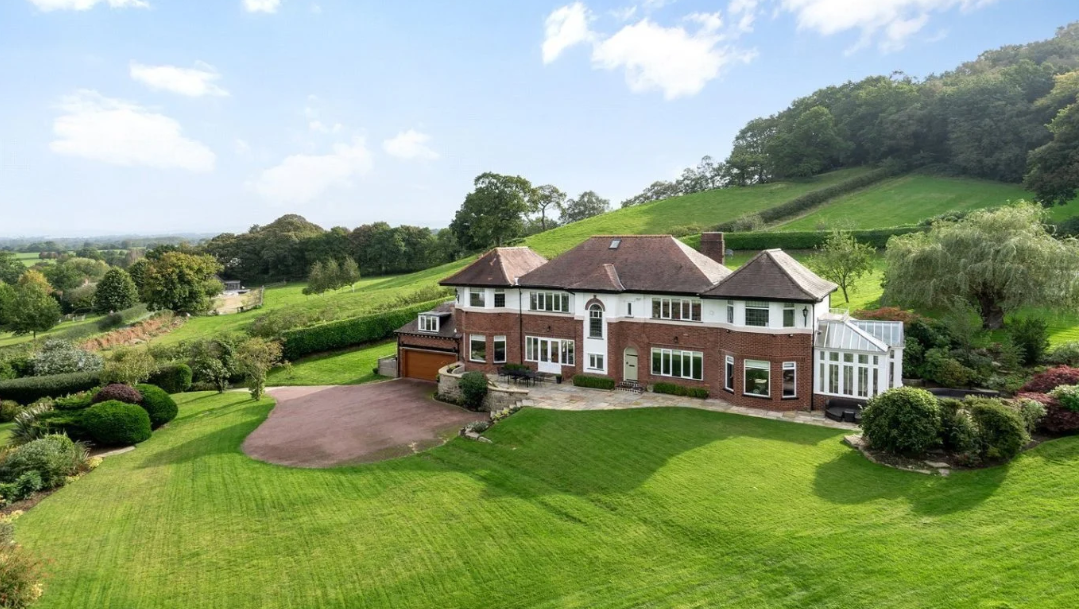
Typical house survey costs in the UK
Across the UK, a RICS Level 2 Survey will often cost several hundred pounds, while a more detailed RICS Level 3 Building Survey will usually cost more.
As a broad guide:
- RICS Level 2 Surveys are usually lower cost and are suited to conventional homes in reasonable condition.
- RICS Level 3 Building Surveys are more detailed and usually cost more because the inspection, analysis and reporting are more involved.
- Listed, unusual, large, altered or higher-risk properties may require more specialist advice, which can increase the fee.
National cost guides commonly place Level 2 surveys in the hundreds of pounds and Level 3 surveys from the upper hundreds into £1,000+ depending on the property. But broad averages are only useful up to a point.
They do not tell you whether the survey is suitable for the property you are actually buying.
That distinction matters.
A cheap survey is only good value if it gives you the right level of advice.
Why survey costs vary so much
Survey prices vary because houses vary.
A surveyor is not just charging for time spent walking around the property. The fee usually reflects:
- time reviewing information before the inspection;
- travel and access arrangements;
- time on site;
- complexity of the building;
- number of rooms, roofs, elevations and outbuildings;
- age and method of construction;
- extent of alterations;
- risk of hidden defects;
- level of reporting required;
- photographs, condition ratings and repair advice;
- legal and statutory matters to flag;
- cost guidance, where included;
- professional experience and insurance;
- follow-up advice after the report.
Two properties may both be described as “three-bedroom houses”, but the surveying work involved can be completely different.
A small modern three-bedroom house with simple construction, good access and no obvious defects is relatively straightforward.
A three-bedroom Victorian house with a cellar, damp, roof alterations, chimney defects, suspended timber floors, older electrics and an extension is not.
The fee should reflect the work required to give useful advice.
What affects the cost of a house survey?
1. The type of survey
The level of survey is one of the biggest factors.
A RICS Level 2 Survey is a visual, non-invasive survey designed for conventional properties in reasonable condition. It is commonly used for modern houses, flats and standard properties where no major defects or unusual construction are suspected.
You can read more here: RICS Level 2 Survey
A RICS Level 3 Building Survey is more detailed. It is usually recommended for older, larger, altered, extended, listed, unusual or visibly defective properties. It gives more detailed commentary on construction, defects, likely causes, repair options, priorities and, where included, budget costs.
You can read more here: RICS Level 3 Building Survey
The Level 3 costs more because it takes more time and requires more detailed professional judgement.
2. The age of the property
Older properties usually need more careful assessment.
A Victorian house, Edwardian terrace, 1930s semi, older cottage or listed building will often have more potential issues than a modern estate house.
Common older-property issues include:
- damp and ventilation problems;
- chimney defects;
- ageing roofs;
- timber decay;
- historic movement;
- suspended timber floors;
- old drainage;
- inappropriate previous repairs;
- older electrical and heating systems;
- solid wall construction;
- lime mortar and cement pointing issues;
- previous alterations without clear documentation.
This does not mean older houses are bad purchases. Many are excellent homes. But they need the right type of survey.
For older, period or listed buildings, a Level 3 or listed building survey is usually more appropriate than a basic report.
3. The size of the property
Larger properties take longer to inspect and report on.
A larger house may have:
- more rooms;
- more roof slopes;
- more elevations;
- more windows and doors;
- more bathrooms;
- more services;
- more outbuildings;
- more boundary walls;
- more drainage points;
- more previous alterations;
- more maintenance liability.
A large detached house in Ascot, Sunningdale, Windsor or Maidenhead may look well-presented but still have a lot of building fabric to inspect.
The bigger the building, the more there is to check.
4. The value of the property
Survey fees often increase with property value.
This is partly because higher-value properties are often larger or more complex, but also because the buyer’s financial exposure is greater.
On a high-value purchase, the cost of getting the wrong advice can be significant. A missed roof issue, drainage defect, damp problem, structural alteration or statutory approval issue can quickly become expensive.
A survey fee should be seen in context. If you are spending £700,000, £1 million or more on a property, paying for the right level of advice before exchange is usually a small proportion of the overall transaction.
5. Whether the property has been extended or altered
Extended houses are common across Berkshire and the Home Counties.
Many family homes have rear extensions, loft conversions, garage conversions, removed walls, open-plan kitchen diners, dormers, altered drainage, replacement roofs, new windows, or outbuildings converted into offices or gyms.
These alterations can add value and living space. They can also introduce risk.
A surveyor may need to consider:
- whether walls have been removed safely;
- whether steel beams appear properly supported;
- whether there are signs of movement between old and new construction;
- whether roof junctions are well detailed;
- whether flat roofs are ageing or defective;
- whether drainage has been altered;
- whether Building Regulations approvals exist;
- whether planning permission or permitted development rights are relevant;
- whether the quality of workmanship is acceptable.
A property with multiple alterations will usually need more detailed inspection and reporting than a standard unaltered house.
6. Whether the property is listed or historic
Listed buildings and historic homes need specialist care.
A standard survey may not be enough if the property has historic fabric, traditional construction, conservation restrictions or previous alterations that could require listed building consent.
Issues to consider may include:
- inappropriate cement pointing;
- damp linked to trapped moisture;
- timber decay;
- historic movement;
- old roof structures;
- traditional windows;
- lime plaster and breathable materials;
- unauthorised alterations;
- conservation area constraints;
- listed building consent risk.
A listed building survey costs more because the advice needs to reflect both condition and conservation risk.
You can read more here: Listed Building Survey
7. Access and inspection limitations
Some properties are harder to inspect.
Examples include:
- high or complex roofs;
- restricted loft access;
- extensive fitted floor coverings;
- heavy furniture and stored items;
- locked outbuildings;
- overgrown boundaries;
- unsafe roof voids;
- no access to garages or communal areas;
- leasehold flats with limited access to roof spaces or external fabric.
Access limitations do not always increase the fee directly, but they can affect the advice needed. Where key areas cannot be inspected, the report may need to explain the risk and recommend further investigation.
8. Whether specialist tools or add-ons are needed
Some buyers want additional information beyond a standard visual inspection.
Depending on the property, add-ons or related services may include:
- drone roof inspection;
- thermal imaging;
- damp investigation;
- indoor air quality checks;
- specific defect inspections;
- CCTV drainage surveys by a drainage contractor;
- electrical testing by an electrician;
- gas safety checks by a Gas Safe engineer;
- asbestos sampling by a specialist.
Not every property needs these. But on the right property, they can be useful.
For example, drone photography can be helpful on larger homes, complex roofs, chimneys, high elevations or properties where roof access is limited. Thermal imaging can be useful where there are concerns about insulation gaps, cold bridging or heat loss, subject to the right conditions.
How much does a Level 2 Survey cost?
A Level 2 Survey is usually the lower-cost option and is suitable for many conventional homes.
It is typically appropriate where the property is:
- modern or relatively conventional;
- built using standard construction;
- apparently in reasonable condition;
- not significantly altered;
- not listed;
- not obviously suffering from major defects;
- not unusually large or complex.
In Berkshire and the Home Counties, a Level 2 may be suitable for many flats, modern terraces, post-war homes and standard estate houses, provided there are no obvious signs of significant risk.
However, “standard” does not mean “risk-free”.
A Level 2 Survey should still help identify visible defects, urgent issues, significant risks and matters requiring further investigation. It should give the buyer a clear overview of the property’s condition before purchase.
It is often the right survey where the buyer needs professional reassurance but does not need the deeper analysis of a Level 3 Building Survey.
How much does a Level 3 Building Survey cost?
A Level 3 Building Survey usually costs more because it is more detailed.
It is typically appropriate where the property is:
- older;
- larger;
- extended;
- altered;
- visibly defective;
- listed or historic;
- non-standard construction;
- in poor condition;
- high value;
- being bought with plans for refurbishment or alteration.
A Level 3 should give more detailed advice about defects, likely causes, repair options, priorities and implications. At Fourth Wall, our Level 3 reports are designed to go further than simply identifying defects. We aim to explain what matters, why it matters, what should happen next and, where appropriate, what costs may be involved.
That can be particularly useful before exchange.
For example, if the report identifies roof defects, dampness, cracking, drainage concerns or issues with previous alterations, the buyer may need to know whether the matter is:
- routine maintenance;
- urgent repair;
- a negotiation point;
- a solicitor query;
- something requiring specialist investigation;
- a reason to reconsider the purchase.
That level of interpretation is often where the value of a good survey sits.
Calculate your house survey costWhy Berkshire and the Home Counties can be different
Survey costs in Berkshire and the wider Home Counties are often influenced by the local property market.
The area includes a wide mix of property types, including:
- modern flats in Reading, Maidenhead and Slough;
- Victorian and Edwardian terraces in Reading, Newbury and Windsor;
- 1930s semis in Wokingham, Bracknell and surrounding suburbs;
- extended family homes across Berkshire and Surrey borders;
- high-value detached homes in Ascot, Sunningdale, Virginia Water and Windsor;
- listed and period properties in villages and conservation areas;
- large plots with garages, outbuildings and drainage complexity.
That variety means the right survey can change significantly from one property to the next.
A basic Level 2 may be perfectly suitable for a modern flat. It may be a poor choice for a heavily extended period property with damp, old roof coverings and unclear alteration history.
Local property values also matter. In higher-value areas, buyers may be spending substantial sums on properties that still have very ordinary building defects. A house does not become low-risk because it is expensive.
In fact, larger and higher-value homes can sometimes carry greater repair exposure because there is simply more building to maintain.
More roof area. More drainage. More windows. More external decoration. More bathrooms. More services. More outbuildings. More hidden cost.
Example survey scenarios
Modern flat in Reading
A relatively modern flat in reasonable condition may only need a Level 2 Survey, especially if the buyer also receives good leasehold information from their solicitor.
However, leasehold flats still need careful review. The survey may raise questions about:
- service charge liability;
- external repair responsibilities;
- roof or cladding issues;
- communal areas;
- damp or condensation;
- fire safety;
- window responsibilities;
- planned major works.
The physical survey and legal due diligence need to work together.
1930s semi in Wokingham
A 1930s semi may look straightforward, but common issues can include:
- ageing roof coverings;
- bay window movement;
- cavity wall insulation concerns;
- older electrics;
- damp at low level;
- suspended timber floor ventilation;
- chimney defects;
- previous extensions;
- asbestos-containing materials.
Depending on condition and alteration history, either a Level 2 or Level 3 may be appropriate.
If the house is largely original, visibly tired, or has been significantly extended, a Level 3 will often be the better choice.
Victorian terrace in Newbury or Reading
A Victorian terrace is usually better suited to a Level 3 Building Survey.
Common considerations include:
- solid walls;
- damp and ventilation;
- old roof structures;
- chimney stacks;
- parapet gutters;
- suspended timber floors;
- timber decay;
- historic movement;
- older drainage;
- previous alterations;
- inappropriate cement pointing or render.
A Level 2 may flag risks, but a Level 3 is more likely to give the depth of advice needed to understand the building properly.
Extended detached house in Maidenhead or Bracknell
An extended detached house can be deceptively complex.
The key risks often sit where the building has been changed:
- rear extension junctions;
- flat roofs;
- removed internal walls;
- steel beams;
- altered drainage;
- rooflights;
- differential movement;
- poor workmanship;
- missing Building Regulations documentation.
The cost of the survey may be higher than a standard house, but that reflects the need to assess more than just the original building.
High-value house in Ascot or Sunningdale
A high purchase price does not remove the need for a proper survey.
Larger homes can have:
- complex roof structures;
- multiple chimneys;
- extensive rainwater goods;
- long drainage runs;
- older heating systems;
- swimming pools or plant rooms;
- outbuildings;
- boundary walls;
- large areas of external decoration;
- previous high-end refurbishments of varying quality.
The survey fee should be considered against the scale of potential exposure.
A missed roof or drainage issue on a large property can cost far more than the survey itself.
Listed or period property near Windsor
Listed and period properties need a more specialist approach.
The surveyor needs to understand not only condition, but also traditional materials, conservation principles and statutory risk.
The wrong advice can lead to inappropriate repairs. The right advice can help buyers understand what they are taking on and what permissions may be needed.
For these properties, the cheapest survey is rarely the best value.
Is a cheaper survey always worse?
No.
A cheaper survey may be perfectly appropriate if the property is simple, modern and low-risk.
The issue is not cheap versus expensive.
The issue is suitable versus unsuitable.
A Level 2 Survey on a modern, conventional property may be good value. A Level 2 Survey on an old, altered or visibly defective property may leave you needing additional advice later.
Equally, not every property needs a Level 3. Paying for more detail than you need is not the aim either.
The aim is to match the survey to the property.
At Fourth Wall, we would rather advise you to choose the right survey than simply push the most expensive option. The right survey is the one that gives you enough information to make a confident decision before exchange.


Background: 19th Century former Water Tower detached home with accompanying pool hall barns, international standard equestrian facilities and 40 acres of land.
___________
Services: Level 3 Home Survey, including budget costing and negotiation support.
Background: 19th Century former Water Tower detached home with accompanying pool hall barns, international standard equestrian facilities and 40 acres of land.
___________
Services: Level 3 Home Survey, including budget costing and negotiation support.
Background: 19th Century former Water Tower detached home with accompanying pool hall and leisure facilities, garages, barns, 20,000 sq.ft international standard equestrian facilities and 40 acres of land.
___________
Services: Level 3 Home Survey, including budget costing and negotiation support.


Why the cheapest quote can be false economy
It is tempting to choose the cheapest survey quote, especially when buying costs are already high.
But you should be careful comparing survey fees as if every report is the same.
A cheaper report may involve:
- less time on site;
- less detailed commentary;
- fewer photographs;
- limited explanation of causes;
- limited repair advice;
- no budget cost guidance;
- little or no follow-up;
- heavy reliance on generic wording;
- less useful advice for your solicitor.
That does not mean every cheaper survey is poor. But buyers should understand what they are paying for.
A good survey is not just a formality. It can help you:
- avoid buying the wrong property;
- renegotiate where defects are significant;
- budget for repairs;
- understand urgent risks;
- identify legal and statutory issues;
- plan future works;
- avoid nasty surprises after completion.
If a survey helps you renegotiate by several thousand pounds, avoid a major repair liability, or walk away from a property that is not right for you, the value is obvious.
But even when it does not change the price, it gives you something important: clarity.
What should be included in the survey fee?
Before instructing a surveyor, ask what is included.
Useful questions include:
- Is the surveyor RICS qualified?
- Who will inspect the property?
- Is the report a standard template or tailored to the building?
- Will photographs be included?
- Will defects be prioritised?
- Will the report explain likely causes?
- Will it tell me what to do next?
- Will it flag legal and statutory matters for my solicitor?
- Will budget costs be included?
- Can I speak to the surveyor after receiving the report?
- How quickly will I receive it?
- Is VAT included?
- Are there extra charges for larger properties, outbuildings, drone inspection or specialist advice?
The answers are often more important than the headline fee.
Two surveyors may quote different prices for what appears to be the same service, but the level of advice, experience and aftercare may be very different.
Do survey costs include specialist testing?
Usually, no.
A standard Level 2 or Level 3 Survey is a visual inspection. It does not normally include specialist testing of electrics, gas, drainage, asbestos or hidden structure.
That means you may still need:
- an Electrical Installation Condition Report;
- a gas safety inspection;
- a CCTV drainage survey;
- an asbestos survey;
- a structural engineer’s report;
- a damp and timber inspection;
- intrusive opening-up, where agreed.
A good survey should help you decide whether those extra checks are actually needed.
This matters because buyers can waste money on unnecessary specialist reports. Equally, they can expose themselves to risk by skipping checks that are genuinely important.
The surveyor’s role is often to help you prioritise.
Can a survey help you renegotiate?
Yes, sometimes.
A survey can support renegotiation where it identifies defects that are:
- significant;
- unexpected;
- not obvious at viewing;
- not already reflected in the agreed price;
- likely to involve meaningful cost;
- supported by clear advice or quotes.
Examples may include:
- major roof repairs;
- active dampness;
- structural movement;
- drainage defects;
- failing flat roofs;
- rotten timber;
- unsafe alterations;
- missing approvals;
- significant chimney defects.
At Fourth Wall, our Level 3 reports can include budget cost analysis to help buyers understand likely exposure. This can be useful when deciding whether to renegotiate, request further information, obtain contractor quotes or proceed as planned.
The point is not to use the survey to chip away at the price unfairly. The point is to understand whether the agreed price still makes sense in light of the building’s condition.
Should first-time buyers pay for a survey?
In most cases, yes.
First-time buyers are often under the most pressure to keep costs down, but they may also have the least experience spotting building defects.
A survey can help first-time buyers understand:
- whether the property is broadly as expected;
- what repairs may be needed;
- what costs could arise soon after completion;
- what legal points need checking;
- whether the property is suitable for their budget;
- whether further investigation is needed before exchange.
The mortgage valuation is not enough. It is for the lender, not the buyer.
A survey is there to help you understand what you are buying.
Is a Level 3 worth the extra cost?
A Level 3 is usually worth the extra cost where the property has more risk.
That includes properties that are:
- older;
- extended;
- visibly defective;
- unusually constructed;
- listed;
- large;
- high value;
- heavily altered;
- poorly maintained;
- being bought for renovation.
The extra cost is not just for a longer report. It is for deeper inspection, more analysis and more useful advice.
A Level 3 can be particularly valuable where you need to understand:
- why a defect has occurred;
- how serious it is;
- what repairs may be needed;
- what happens if you do nothing;
- what costs may be involved;
- what should be checked before exchange.
For many Berkshire and Home Counties buyers, the difference in fee between a basic and more detailed survey is small compared with the cost of missing a significant defect.
Calculate your house survey costHow to keep survey costs proportionate
You do not need to over-survey every property.
To keep costs sensible:
- Choose the right survey level for the property.
- Do not pay for unnecessary add-ons.
- Use the survey to decide which specialist checks are genuinely needed.
- Ask for advice before booking if you are unsure.
- Use a survey calculator to get an early guide price.
- Think about risk, not just fee.
If the property is modern, conventional and in reasonable condition, a Level 2 may be enough.
If the property is older, altered, listed or complex, a Level 3 is likely to be better value.
If you only have one concern, such as cracking, damp or roof condition, a Specific Defect Survey may be more appropriate.
You can read more here: Specific Defect Survey
How Fourth Wall prices house surveys
Fourth Wall prices surveys based on the property and the level of advice needed.
We consider factors such as:
- property type;
- age;
- size;
- location;
- value;
- listed status;
- complexity;
- alterations;
- visible risks;
- survey level;
- any additional services required.
The simplest way to get an initial guide is to use our House Survey Calculator.
For more complex properties, we may recommend a tailored quotation so we can make sure the scope properly reflects the building.
Our aim is not to be the cheapest surveyor on a comparison site. It is to provide clear, useful and properly considered advice before you commit to buying.
That means:
- reports prepared by experienced surveyors;
- plain-English findings;
- clear photographs;
- risk-rated advice;
- executive summaries;
- legal and statutory matters flagged for you and your advisors;
- practical next steps;
- budget cost guidance where appropriate;
- follow-up support.
We know buyers do not just need a document. They need help understanding what the findings mean and what to do next.
Calculate your house survey costWhy our reports are designed for more than just the buyer
A good residential survey should support the whole transaction.
That does not mean acting for the seller, lender or solicitor. It means presenting information clearly enough that everyone advising the buyer can understand the relevant risks.
At Fourth Wall, our reports are aimed at helping:
- you, as the buyer, understand the property;
- your solicitor identify legal and statutory matters;
- your mortgage advisor understand potential lender concerns;
- contractors price relevant repairs;
- specialists understand what needs further investigation.
This is why our executive summaries are important. They help draw attention to the issues that need action before exchange, rather than leaving important points buried deep in the report.
For buyers, that can make the process calmer, clearer and more useful.
So, how much should you budget?
As a broad starting point, you should expect a professional house survey to cost several hundred pounds, with more detailed, complex or specialist surveys costing more.
But the better question is:
What would it cost if I do not get the right advice?
A missed roof defect, damp problem, drainage issue, structural alteration, timber defect or listed building consent problem can cost far more than the survey.
That does not mean every buyer needs the most expensive report.
It means the fee should be judged against the risk.
For a simple modern property, a Level 2 may be the right balance.
For an older or more complex property, a Level 3 may be a much better investment.
For a listed building, a heritage-aware survey is usually essential.
For a single concern, a Specific Defect Survey may be enough.
The right survey should help you make a confident decision before exchange.
Final thoughts
House survey costs vary because houses vary.
A useful survey is not just a box to tick for the mortgage process. It is professional advice on one of the biggest financial decisions most people will ever make.
If you are buying in Berkshire or the wider Home Counties, the right survey depends on the property in front of you: its age, condition, construction, value, alteration history and risk.
The cheapest suitable survey is good value.
The cheapest unsuitable survey is false economy.
If you are not sure which survey you need, use our House Survey Calculator for an instant guide price, or speak to Fourth Wall before you book.
We can help you decide whether a Level 2 Survey, Level 3 Building Survey, Listed Building Survey or Specific Defect Survey is right for the property.
The cost depends on the type, size, age, value and complexity of the property. A straightforward Level 2 Survey will usually cost less than a detailed Level 3 Building Survey. Larger, older, listed or heavily altered properties usually cost more because they take longer to inspect and require more detailed advice.
For an instant guide, use Fourth Wall’s House Survey Calculator.
A Level 2 Survey is usually the lower-cost option and is suitable for many modern or conventional properties in reasonable condition. The exact fee depends on the property’s size, value, location and complexity.
It is often suitable for standard houses and flats where there are no obvious signs of major defects, unusual construction or extensive alteration.
A Level 3 Building Survey usually costs more than a Level 2 because it is more detailed. It is typically recommended for older, larger, extended, altered, listed, unusual or visibly defective properties.
The fee reflects the additional time needed for inspection, analysis and reporting.
Yes, where the property has more risk. A Level 3 Survey is usually worth considering for older homes, extended houses, listed buildings, high-value properties, unusual construction or properties where you are planning works.
It can help you understand defects, likely causes, repair priorities, future maintenance and potential costs before exchange.
Only if it is suitable for the property.
A cheap Level 2 Survey may be good value for a modern, conventional property in reasonable condition. But it may be false economy for an older, altered or defective property that needs more detailed advice.
The right survey is the one that matches the property and the risk.
Higher-value properties are often larger, more complex or located in areas where repair costs and buyer exposure are higher. The fee also reflects the professional responsibility involved in advising on a significant purchase.
A high-value home can still have major defects, including roof issues, damp, drainage problems, poor alterations or statutory approval concerns.
Often, yes. Modern houses can still have defects, including poor workmanship, roof issues, damp, cracking, drainage concerns, ventilation problems or incomplete certification.
A Level 2 Survey may be suitable for many modern homes, but the right advice depends on the property.
Usually, yes. Older houses often have more complex construction, historic alterations, damp risk, ageing roofs, chimney defects, timber floors and older services.
A Level 3 Survey is usually better suited to older, altered or period properties because it gives more detailed advice.
No. A standard house survey is a visual inspection and does not include electrical testing. The surveyor may comment on visible parts of the installation and recommend an Electrical Installation Condition Report where appropriate.
No. A standard Level 2 or Level 3 Survey does not usually include a CCTV drainage survey. The surveyor may inspect visible drainage points where accessible and recommend further drainage investigation if there are signs of concern.
Yes, where the survey identifies significant, unexpected defects that were not already reflected in the agreed price. Examples might include major roof repairs, structural movement, damp, timber decay, drainage problems or missing approvals.
A well-explained survey can support a more sensible, evidence-based negotiation.
A listed building usually needs more specialist advice than a standard survey. A Listed Building Survey or suitably detailed Level 3 Survey is normally recommended, ideally from a surveyor who understands traditional construction, conservation principles and listed building consent risk.
An extended house often benefits from a Level 3 Building Survey, particularly where walls have been removed, flat roofs added, drainage altered, lofts converted or Building Regulations information is unclear.
The survey should consider both the original building and the quality of the alterations.
You can use Fourth Wall’s House Survey Calculator for an instant guide price. For larger, listed, unusual or more complex properties, it may be better to request a tailored quotation so the scope properly reflects the building.