Introduction – Why Choosing the Right Surveyor in Ascot Matters
Ascot’s property market demands precision and trust. Whether you’re purchasing a historic estate or a modern build, working with a surveyor who offers both technical depth and local insight is crucial. In this guide, we’ll unpack the differences between RICS-accredited professionals and independent surveyors in Ascot, helping you make a choice that’s grounded in integrity, clarity, and expertise.
What Is an RICS Accredited Surveyor?
- RICS accreditation and specifically means completion of rigorous training, via an RICS approved route, most often the Assessment of Professional Competence (APC), and ongoing Continuing Professional Development (CPD).
- These professionals must abide by RICS standards, ethical codes, carry professional indemnity insurance, and are accountable through RICS complaints procedures.
- The RICS, founded in 1868 with over 113,000 members globally (including 105,000 Chartered Surveyors), sets the benchmark for international property and construction standards.
- There are three designations an RICS Member may use, depending on their level of qualification:
- AssocRICS: Associate membership, which RICS describes as its entry-level professional qualification.
- MRICS: Full Member of the RICS and Chartered Professional.
- FRICS: Fellow of the RICS. Typically awarded to surveyor after significant contribution to the profession or experience in their sector.
What Is AssocRICS vs MRICS? And Does It Matter for Homebuyers?
- AssocRICS (Associate Member):
An entry-level RICS qualification, awarded based on a mix of relevant experience, vocational training, or academic credentials, without necessarily requiring a degree or passing the full Assessment of Professional Competence process. AssocRICS professionals are regulated by RICS, bound by ethical codes, and can be capable of delivering RICS-licensed residential surveys such as Levels 2 or 3. However, they cannot use the title “Chartered Surveyor”. - MRICS (Member):
A full chartered status that requires either an RICS-accredited degree plus experience, or sufficient professional experience and passing RICS’s Assessment of Professional Competence (APC) process. MRICS members are entitled to call themselves “Chartered Surveyors” a legally protected designation, and enjoy broader professional recognition. Most importantly, whatever their route to qualification, they have typically undergone a longer, more in-depth period of training.
Why does the distinction matter?
The distinction matters because professional qualifications give consumers an independently verifiable indication of the level of professional assessment somebody has completed.
MRICS represents Chartered status and a broader professional competency assessment than Associate membership. That does not mean every MRICS surveyor has greater residential surveying experience than every AssocRICS surveyor.
A highly experienced AssocRICS residential surveyor may be considerably more suitable for a particular property than an MRICS surveyor whose professional experience lies in another surveying discipline.
The appropriate approach is therefore to verify the qualification first and then establish whether the individual’s experience is relevant to the property.
Chartered Independent Surveyors – The Sweet Spot for Ascot Buyers
According to a locally focused comparison by Fourth Wall, chartered independent surveyors in Ascot offer the best of both worlds
| Feature / Criteria | Independent Surveyor | AssocRICS Surveyor | MRICS (Chartered) Surveyor |
|---|---|---|---|
| RICS Regulation & Standards | No | Yes (RICS-regulated) | Yes (RICS-regulated) |
| Qualification Standard | None | 2 years written submission assessment. No mandatory practice experience. | 1-4 year Degree qualification. Broad range of competency assessment criteria demonstrated over minimum 2 years in practice experience. Written submission. Interview process verified by 3 qualified chartered surveyors. |
| Title: Chartered Surveyor | No | No | Yes |
| Technical & Academic Threshold | Varies | Moderate (vocational + experience) | Higher (degree + APC) |
| Consumer Confidence | Varies | Good: regulated and trained | Excellent: fully qualified and chartered |
| Survey Capability (RICS-licensed) | Possibly | Yes Level 1-3 with the right experience. Particularly important to check for Level 3. As a company we wouldn’t permit an AssocRICS surveyor to undertake a Level 3 inspection without a chartered surveyors supervision. | Yes Level 1-3. |
| Lender Acceptance (Valuations) | Depends | Often accepted by high-street lenders, but not always. | Broadly accepted, incl. commercial |
| Local Market Insight (Ascot) | Varies | Often good | Strong, depending on individual |
| Aftercare & Accountability | Varies | RICS complaints path | RICS complaints path |
So, who should you trust?
The answer depends on both professional qualification and relevant experience, but the qualification provides an important starting point.
MRICS represents Chartered status and requires a broader, more in-depth independent assessment of professional competence than Associate membership. It therefore gives homebuyers a stronger, independently verifiable benchmark before they begin considering the surveyor’s particular experience.
That does not mean every MRICS surveyor will automatically be the best person for every residential instruction. An experienced AssocRICS surveyor who specialises in a particular property type may still be entirely appropriate for either a Level 2 or Level 3 Home Survey.
However, for older, altered, listed or otherwise complicated buildings, we would generally place greater weight on both the depth of professional qualification and the individual’s directly relevant experience. Consumers should ask how regularly the surveyor works with comparable buildings, traditional construction, defect diagnosis and repair.
The more complex the property, the more important it becomes to have both a robust professional qualification and demonstrable experience to match.
Why Fourth Wall Could Be a Good Fit for You
- Full Chartered Credentials: All our surveyors hold MRICS status, meaning we are fully regulated, qualified, and recognised as Chartered Surveyors.
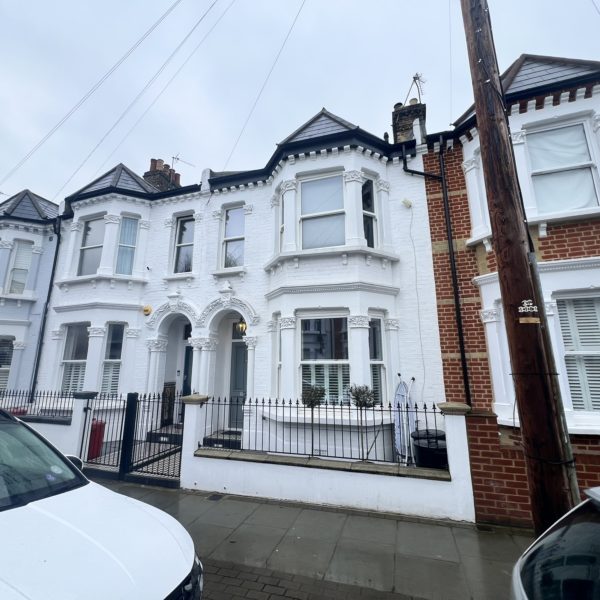
- Local, Personal Service: We deliver bespoke reporting and follow-through, tailored specifically to Ascot’s property mosaic, from Victorian homes to modern builds.
- Transparent Accountability: Should issues arise, you can rely on RICS oversight and a structured complaints process, plus the added benefit of our local presence.
Final Verdict for Ascot Homebuyers
- Need regulated service for a standard property? AssocRICS may suffice.
- Buying a complex, high-value, or heritage property and want maximum reassurance? Stick with a Chartered MRICS surveyor.
- At Fourth Wall, we deliver that full confidence, without corporate impersonality. Want to discuss which option fits your purchase scenario? Let’s chat.
FAQs – Choosing Between RICS, Independent, AssocRICS, and MRICS Surveyors in Ascot
What’s the difference between a surveyor, a RICS surveyor, and a Chartered Surveyor?
- The term “surveyor” is not legally protected anyone can use it, regardless of qualifications.
- A RICS Surveyor is regulated by the Royal Institution of Chartered Surveyors and must follow professional standards.
- A Chartered Surveyor is a fully qualified MRICS member and holds the highest regulated status in the industry.
Is AssocRICS a ‘lesser’ qualification than MRICS?
- Not lesser, but different. AssocRICS is an entry-level professional qualification with RICS oversight. It allows professionals to carry out residential surveys under RICS regulation.
- MRICS status reflects a more advanced level of training, assessment, and typically more complex survey experience. It’s especially beneficial when dealing with complex properties.
Are AssocRICS surveyors good enough for homebuyers?
Yes, especially for standard residential surveys as a baseline of their qualification, although it is possible for an AssocRICS surveyor to have experience to this level, although needs to be verified by their experience. Many AssocRICS professionals are highly competent, but MRICS surveyors by default have broader experience, wider lender recognition and often a longer period of structured training.
Can I trust an independent surveyor who isn’t RICS-qualified?
It depends. Some independent surveyors may be experienced, but without RICS oversight, there’s no official code of conduct, complaints procedure, or assurance of competency. Always check credentials, sample reports, and reviews.
Does lender mortgage approval depend on whether my surveyor is AssocRICS or MRICS?
Most high-street lenders will accept valuations from both AssocRICS and MRICS surveyors. However, some commercial or specialist lenders prefer or require a Chartered (MRICS) surveyor for formal valuations.
Which surveyor type is best for a listed or older property in Ascot?
For a listed, historic or significantly older property, relevant experience of historic buildings should be a primary consideration.
Look for a surveyor who regularly inspects buildings of a similar age and construction and understands traditional materials, moisture behaviour, historic alterations, conservation principles and the statutory controls affecting listed buildings.
MRICS Chartered status provides a valuable independently assessed professional benchmark, but it should be combined with demonstrable historic-building or conservation experience.
For particularly significant or complicated historic buildings, additional conservation qualifications or accreditation may also be relevant.
What protections do I have if something goes wrong with a RICS surveyor?
RICS members are subject to RICS professional and ethical standards, while RICS-regulated firms must comply with regulatory requirements including appropriate complaints-handling and professional indemnity arrangements.
Consumers should still check the terms of engagement, the identity and professional status of the surveyor undertaking the inspection and the firm’s complaints procedure before appointment.