Commercial Real Estate Consultancy
Landlord Dilapidations Surveyors.
Protect the asset. Evidence the claim. Plan what happens next.
When a commercial tenant leaves premises in disrepair, fails to reinstate alterations or has not complied with its property obligations, the consequences can extend well beyond the immediate cost of repair.
The landlord may also be dealing with reletting, refurbishment, void exposure, future capital expenditure and the need to reposition the asset for its next use.
A strong dilapidations strategy is therefore not about preparing the largest possible Schedule. It is about identifying genuine breaches, establishing the technically appropriate remedy, properly evidencing the resulting loss and aligning the claim with what you actually intend to do with the property.
Fourth Wall acts for commercial landlords, investors, asset managers and property managers before, during and after lease expiry. We prepare Interim and Terminal Schedules of Dilapidations, support Quantified Demands, review tenant Responses, negotiate claims and, where required, manage the subsequent repair or refurbishment works.
Our advice combines technical building expertise, dilapidations case-law knowledge, realistic construction costs and commercial asset strategy.
RICS Chartered Building Surveyors | Landlord & asset management experience | Industrial, logistics, office, retail & specialist property | UK regional coverage
Tenant approaching lease expiry? Start before the keys come back.
The strongest landlord position is usually established before possession is returned, not afterwards.
Early advice gives you time to inspect the property, understand the tenant’s obligations, review alterations, establish whether any reinstatement steps are required and decide what you genuinely intend to do with the premises.
It can also give the tenant sufficient opportunity to address properly founded breaches while it still controls and occupies the property.
For larger, more complex or heavily altered assets, lease-expiry planning can sensibly start 12–24 months before termination, with the precise timing depending on the property, lease and strategy. Your own landlord presentation similarly advocates early review rather than waiting until expiry.
Already approaching expiry?
Send us the property address, lease, expiry or break date, any Schedule of Condition and Licences for Alterations. We can review the information available and recommend an appropriate strategy.
For the wider landlord-and-tenant process, see our General Dilapidations advice page.
What are commercial landlord dilapidations?
Dilapidations are breaches of a tenant’s property-related lease obligations.
They may arise during the tenancy, at a break date or when the lease ends.
Repair
Failure to maintain or put the demised premises into the condition required by the repairing covenant.
Redecoration
Failure to comply with contractual internal or external decoration obligations.
Reinstatement
Failure to remove alterations or return the premises to the configuration required by the lease or relevant Licences for Alterations.
Statutory Compliance
Failure to comply with relevant statutory requirements.
Yielding up
Failure to return the premises in the condition and arrangement required at lease expiry.
A Schedule of Dilapidations should identify the relevant obligation, alleged breach and appropriate remedy rather than simply provide a generic list of defects. The Ministry of Justice Protocol specifically requires breaches to be separated into appropriate categories such as repair, reinstatement and redecoration.
For independent professional guidance, see:
Dilapidations should form part of the asset strategy
Dilapidations should not be managed as a standalone surveying exercise that finishes when a settlement is agreed.
The condition in which a tenant returns a building can directly affect marketability, rental income, capital expenditure, future investment and the speed at which the asset returns to income. This is one of the central themes of Fourth Wall’s landlord and asset-manager training.
Marketability and void exposure
A property returned with significant disrepair, outdated fit-out or poorly coordinated reinstatement may require substantial landlord works before it is ready for marketing or occupation.
Identifying those issues early gives the landlord more opportunity to coordinate the tenant’s obligations with the next letting.
Rental and capital value
Physical condition can influence the attractiveness of the property to occupiers and investors.
Equally, requiring the outgoing tenant to complete works that the landlord immediately removes may not represent the best asset outcome.
The dilapidations position and future investment strategy should therefore be considered together.
Strategic flexibility
Early assessment creates choices.
The landlord may decide to:
- Require specific tenant works
- Require reinstatement
- Retain useful alterations
- Seek a financial settlement
- Coordinate tenant and landlord works
- Incorporate recovery into a wider refurbishment
Those choices become more restricted once the tenant has left.
CAPEX and forecasting
An early assessment can help distinguish: Potential tenant recovery from landlord-funded refurbishment or improvement.
That distinction can feed into asset business plans, refurbishment budgets, cash-flow forecasts and CAPEX planning.
Asset performance
The ultimate objective is not simply to conclude the dilapidations claim.
It is to put the asset in the strongest possible position for its next stage.
The dilapidations strategy should support the asset strategy — not operate separately from it.
Start with what you intend to do with the property
Before preparing a terminal claim, one of our first questions is:
What happens to the property when the tenant leaves?
That answer can materially affect the strategy.
Re-let substantially as it stands
The priority may be returning the premises to a properly repaired, decorated and marketable condition with minimal delay.
Refurbish
Some tenant works may remain entirely relevant, while other items may overlap with the landlord’s proposed refurbishment.
Reconfigure
Existing partitions, layouts or installations may have limited relevance to the proposed configuration.
Redevelop
More substantial proposed works can raise important questions concerning supersession and the proper measure of loss.
Sell
Property condition, outstanding breaches and the certainty of any recovery may influence transaction strategy.
Re-let to an identified incoming tenant
The next occupier may want useful elements of the existing fit-out retained rather than removed and recreated.
Landlord intentions are not simply a commercial consideration. When endorsing a terminal Schedule, the Protocol expects the landlord or its surveyor to have taken full account of the landlord’s intentions. A Quantified Demand should also exclude items likely to be superseded by those intentions

When should landlords start planning for lease expiry?
18–24 months before expiry
For significant, complex or heavily altered properties, this can be an appropriate point for an early strategic review.
Consider:
- Repair obligations
- Decoration
- Schedule of Condition
- Licences for Alterations
- Known defects
- Existing tenant maintenance
- Reinstatement
- Tenant covenant strength
- Likely future use
- Refurbishment or redevelopment
- Potential CAPEX
This may also identify whether action during the term should be considered.
Around 12 months before expiry
The landlord’s future property strategy should be becoming clearer.
This is a good time to:
- Inspect the premises
- Review the lease
- Review alteration documentation
- Identify significant breaches
- Establish potential reinstatement
- Determine whether any notices need consideration
- Develop indicative costs
- Coordinate with the solicitor and letting or asset-management team
Around 6 months before expiry
The strategy should generally be active.
This may include:
- Preparing or updating the Schedule
- Monitoring tenant works
- Confirming reinstatement requirements
- Preserving evidence
- Reviewing proposed tenant remedies
- Planning post-expiry works
- Considering negotiations
- Coordinating marketing and refurbishment
At lease expiry
Record the actual handback condition.
This may include:
- Final inspection
- Updated photographic evidence
- Assessment of tenant works
- Outstanding breaches
- Remaining alterations
- Handover arrangements
After expiry
The terminal claim should reflect the actual handback condition and actual landlord strategy.
The Protocol says the landlord’s Schedule should be sent within a reasonable time and will generally be expected within 56 days after termination. A Quantified Demand is ordinarily expected within the same general timescale.
For a wider explanation of the process, see The Dilapidations Timeline and Process in UK Commercial Property.
Should landlords wait until lease expiry to deal with disrepair?
Not necessarily.
Where significant deterioration is developing during a longer tenancy, waiting until expiry can allow the problem and potential cost to increase.
An Interim Schedule of Dilapidations can identify relevant breaches while the lease remains in force.
That may help:
- Preserve the condition of the asset
- Bring significant deterioration to the tenant’s attention
- Encourage appropriate maintenance
- Prevent liability becoming concentrated at lease expiry
- Protect expensive roof, façade or service elements
The legal remedies available during the term differ from a terminal damages claim and can involve important statutory restrictions, so the building surveyor should work with the landlord’s solicitor where enforcement is being considered. RICS separately addresses dilapidations during the lease term as part of its current professional standard.
What is a Jervis v Harris clause?
Some commercial leases contain provisions allowing the landlord, following the contractual procedure, to enter the premises and undertake works that the tenant should have completed.
These are commonly referred to as Jervis v Harris clauses.
They can be powerful because properly structured provisions may allow the landlord to recover expenditure as a debt rather than waiting to pursue a conventional damages claim.
They are also legally sensitive.
RICS warns that these clauses tend to contain specific procedural requirements and that incorrect use can expose the landlord to counterclaims such as trespass or breach of quiet enjoyment. Legal advice should therefore be obtained before exercising such rights.
Our role is to identify the physical breaches, appropriate remedial works and technical considerations. Your solicitor should advise on whether and how the contractual remedy can be exercised.
Do you need to serve a reinstatement notice?
Potentially and this should be checked before expiry.
Tenant alterations may have been undertaken under:
- The lease
- Licences for Alterations
- Landlord approvals
- Side letters
- Other supplemental agreements
Those documents can contain specific requirements governing whether and when reinstatement must be requested. For example, a Licence for Alterations may require the landlord to give notice before expiry if particular works are to be removed. The surveyor should therefore review the alteration history early, establish what technically requires reinstatement and flag any contractual notice requirements for the landlord’s solicitor. Waiting until the tenant has already handed back the keys can materially weaken the landlord’s options where the documentation imposes a time-sensitive requirement.
How do we prepare a landlord’s Schedule of Dilapidations?
1. Review the documentation
We consider the relevant property obligations from a building-surveying perspective, including:
- Repair
- Decoration
- Yielding up
- Reinstatement
- Schedule of Condition
- Licences for Alterations
- Lease plans
- Relevant approvals
- Previous Schedules
- Available condition and maintenance information
Legal interpretation remains with the landlord’s solicitor where required.
2. Inspect and evidence the condition
We systematically inspect the property and record evidence of alleged breaches.
The inspection is tailored to the construction and use of the asset rather than produced from a generic defect checklist.
3. Identify the relevant obligation and breach
Each item should be linked to the contractual obligation relied upon.
Repair, reinstatement and decoration should be properly distinguished.
The Protocol requires Schedules to identify the relevant categories and specific lease obligations.
4. Define the technically appropriate remedy
The proposed work should remedy the breach.
It should not simply reproduce the landlord’s wider refurbishment specification where that goes beyond the tenant’s obligation.
5. Cost the work realistically
Where a costed Schedule is appropriate, the claim should reflect how the works would actually be undertaken.
6. Consider landlord intentions before endorsement
The Protocol endorsement requires the surveyor to be satisfied that the proposed works are reasonably required, the landlord’s intentions have been taken into account and any costings are reasonable.
That is why item-by-item scrutiny makes the landlord claim stronger rather than weaker.
Technical scrutiny makes a stronger landlord claim
A claim is easier to defend when the technical evidence behind it is robust.
If substantial replacement is genuinely required, the Schedule should demonstrate why.
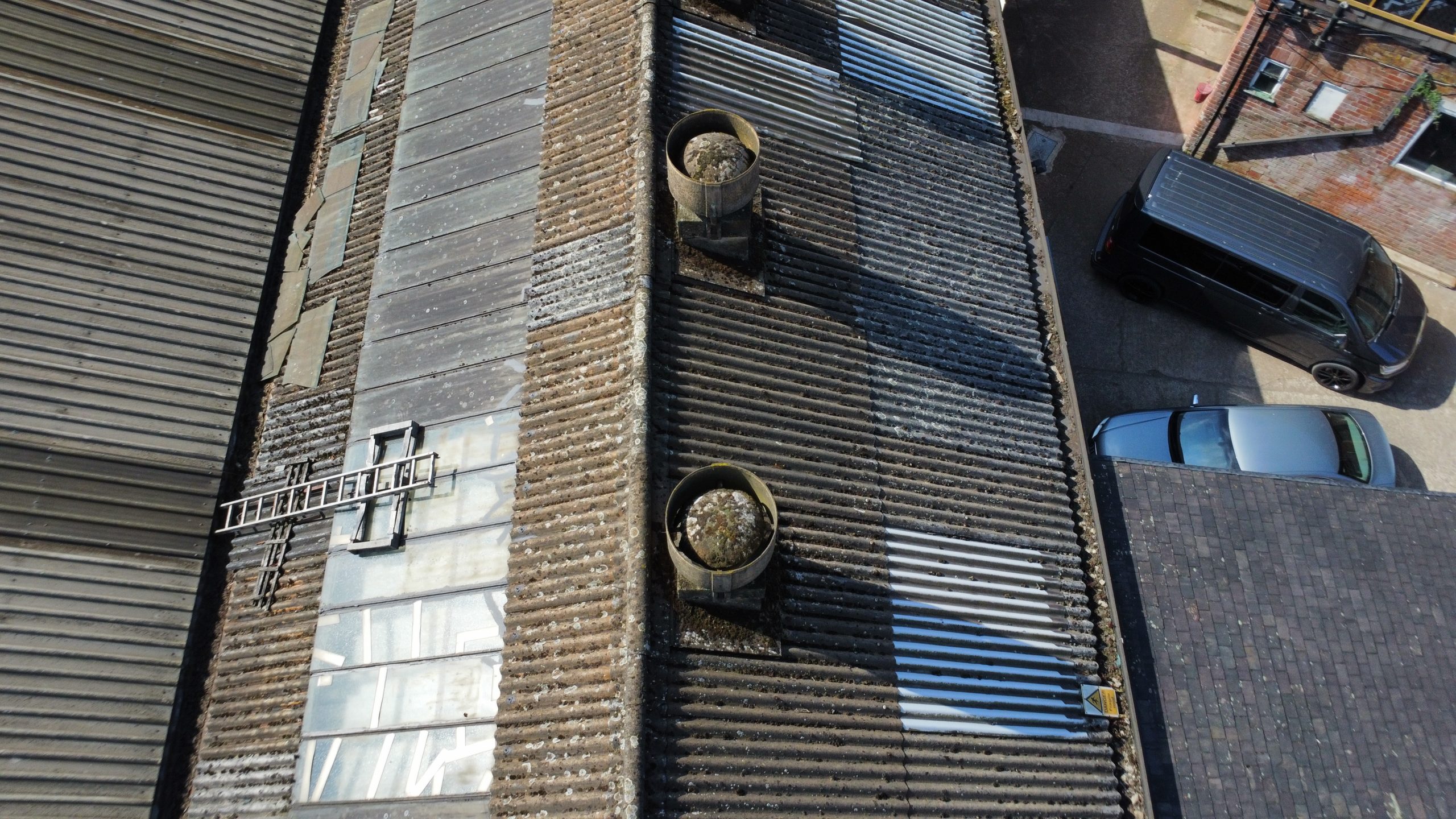
Roofs and rooflights
We may consider:
- Roof construction
- Coating deterioration
- Cut-edge corrosion
- Sheet laps
- Fixings
- Rooflights
- Flashings
- Penetrations
- Gutters
- Drainage
- Previous repairs
- Localised versus systemic failure
Where whole-roof replacement is claimed, the technical condition should support why localised repair would not adequately remedy the breach.
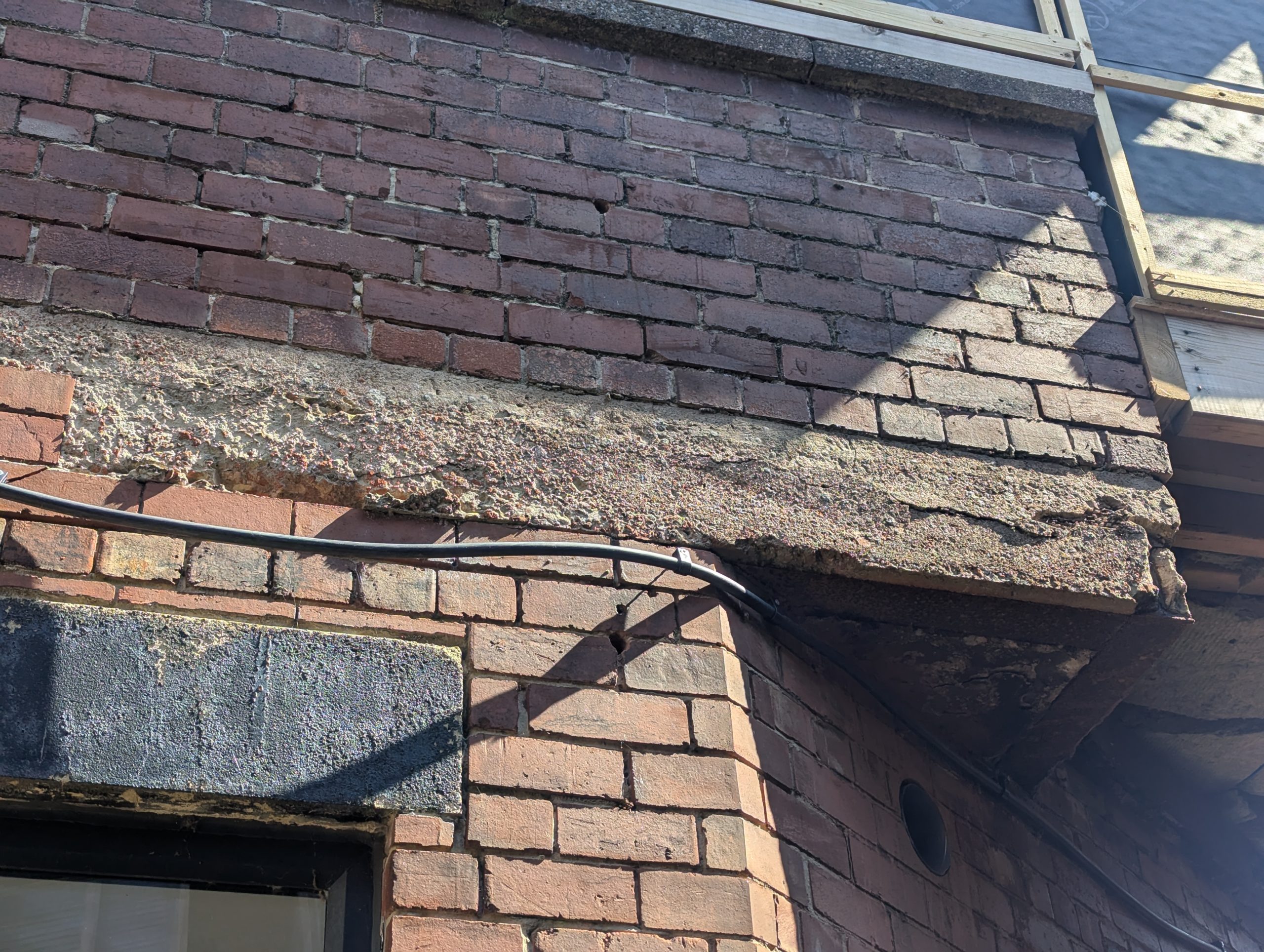
Cladding and external walls
Relevant issues can include:
- Coating breakdown
- Impact damage
- Failed seals
- Panel deterioration
- Fixings
- Water ingress
- Previous repairs
- Masonry deterioration
Concrete floors and external yards
Industrial claims can include substantial expenditure relating to:
- Floor slabs
- Joints
- Surface wear
- Racking fixings
- Machinery bases
- Loading damage
- External hardstanding
- Drainage
- Fencing and gates
Doors and loading equipment
Roller shutters, loading doors, dock installations and personnel doors need proper assessment of whether repair, component replacement or renewal is genuinely appropriate.
Internal finishes
The Schedule should distinguish between:
- Repair
- Damage
- Contractual redecoration
- Reinstatement
- Ordinary ageing
- Landlord refurbishment
Mechanical and electrical services
The fact that equipment is old does not automatically establish breach or justify replacement.
Where substantial M&E works are being claimed, specialist advice may be appropriate to establish actual condition, maintenance history, technical obsolescence and whether the proposed replacement represents repair or improvement.
The stronger the technical basis of the Schedule, the harder legitimate items are to dismiss as simply an inflated landlord claim.
How should dilapidations works be costed?
A credible claim needs credible cost information.
We consider not only individual rates but the way the works would actually be delivered.
That can include:
- Quantities
- Repair methodology
- Access
- Scaffolding
- MEWPs
- Preliminaries
- Contractor overhead and profit
- Waste and disposal
- Interfaces between trades
- Phasing
- Programme
- Professional input
- Whether several items would realistically form one works package
A claim can be overstated even where individual rates appear reasonable if the scope, quantities or procurement assumptions are unrealistic.
Conversely, underpricing a genuine liability can unnecessarily reduce the landlord’s opening position.
Where the landlord has actually undertaken the remedial works, tender returns, contracts and invoices can provide useful evidence of expenditure.
For wider commentary on itemised cost assessment, see Dilapidations Cost Estimates: How to Budget for Lease-End Repairs.
What is a Quantified Demand?
A Schedule of Dilapidations and a Quantified Demand are not the same thing. The Schedule identifies alleged breaches and the works considered necessary to remedy them.
The Quantified Demand sets out the landlord’s monetary claim for the loss resulting from those breaches. The Protocol requires that demand to substantiate the amount sought and makes an important distinction:
the landlord’s likely loss is not necessarily the same as the cost of every work item within the Schedule.
Where additional losses are claimed, they should be properly detailed, quantified and supported by the appropriate contractual or legal basis.

A bigger Schedule does not necessarily create a stronger claim
An overstated claim can create unnecessary areas of dispute and undermine confidence in otherwise legitimate items.
Fourth Wall does not approach landlord instructions by including every arguable item in the hope that negotiations eventually land somewhere in the middle.
For every material item, we consider:
What obligation applies?
What is the breach?
What evidence supports it?
What technically remedies it?
What will that remedy reasonably cost?
What does the landlord intend to do?
What loss results?
The Protocol endorsement itself requires the landlord surveyor to be satisfied that the works are reasonably required, landlord intentions have been considered and costings are reasonable.
A technically credible Schedule is therefore a stronger negotiating document than an artificially inflated one.
Expect an experienced tenant surveyor to challenge the claim
A strong landlord strategy anticipates the tenant’s likely arguments before the Response arrives. Fourth Wall’s landlord training identifies several recurring areas of challenge.
Supersession
The tenant may argue that the landlord’s refurbishment or redevelopment renders claimed repair works unnecessary.
The answer is evidence of what the landlord genuinely intends to do and how the claimed work interacts with those plans.
Betterment
The tenant may argue that the proposed remedy improves the asset beyond the standard required by the lease.
This is why the repair methodology and specification need a sound technical basis.
Obsolescence
Particularly with building services or dated office fit-out, the tenant may argue that the proposed replacement relates to modernisation rather than remedying its breach.
Section 18(1)
For relevant repairing covenant breaches, the tenant may argue that the repair-cost claim exceeds the diminution in the value of the landlord’s interest.
Schedule of Condition
Where the lease limits repair liability by reference to existing condition, the tenant may rely upon the original Schedule.
See our Commercial Schedule of Condition Survey service.
No proper substantiation of loss
Where the landlord has not carried out the works, the tenant may scrutinise the evidence demonstrating what loss has actually arisen.
Understanding how the tenant is likely to defend the claim allows us to prepare the landlord position accordingly.
For a tenant-side perspective, see our Dilapidations Advice for Commercial Tenants.
Section 18 is a landlord issue too
Section 18(1) of the Landlord and Tenant Act 1927 is frequently presented as a tenant defence, but a well-advised landlord should consider its potential effect before the claim is challenged.
Broadly, damages for relevant breaches of repairing covenants cannot exceed the diminution in the value of the landlord’s reversion caused by the breach.
The legislation also addresses circumstances in which demolition or sufficiently extensive structural alterations would render repair works valueless.
Section 18 does not mean that every landlord claim should automatically be reduced.
It means that, where the issue is genuinely material, the claim should be supported by the right combination of:
Building Surveying advice
To establish breach, technical remedy and reasonable repair cost.
Valuation advice
Where diminution needs to be established.
Legal advice
To advise on the legal basis and recoverability of the claim.
Agency or investment advice
Where reletting, marketability or other consequential losses require appropriate evidence.
The strongest landlord claims are multidisciplinary where the circumstances require it.
Settlement or undertake the works: which is better for the landlord?
There is no universal answer.
A commercial settlement may be preferable where
The landlord wants certainty, wishes to progress a wider refurbishment or can use the recovery more effectively than requiring the outgoing tenant to undertake works that do not align with the next letting.
Benefits can include:
- Earlier certainty
- Reduced negotiation around tenant contractors
- Greater control of the final refurbishment
- Ability to coordinate works with future asset improvements
Undertaking the works may strengthen the position where
The works genuinely need to be completed and the landlord intends to return the premises to market in that condition.
Actual tendering and expenditure can also provide useful evidence of the landlord’s loss.
The right question is not simply “can we settle?” It is “which route best protects recovery while supporting the next stage of the asset?”
Can landlords recover loss of rent and other holding costs?
Potentially, where the loss is genuine, properly caused by the relevant breaches and appropriately evidenced.
Depending on the circumstances, a Quantified Demand may potentially include losses beyond the physical remedial works.
However, these should not be included automatically.
For example, the existence of a repair programme does not itself demonstrate that every day of a void period was caused by the tenant’s breach.
Where material additional losses are being considered, the landlord should assemble appropriate evidence and obtain legal, agency or valuation advice where required. The Protocol requires additional losses to be set out in detail, substantiated and fully quantified.
Tenant covenant strength and timing matter
A technically strong claim still carries commercial risk if the tenant’s financial position is deteriorating.
Landlords and asset managers should therefore consider the tenant covenant alongside the building condition and lease timetable.
Early action can provide more opportunity to:
- Understand potential exposure
- Engage with the tenant
- Clarify required works
- Obtain security or legal advice where relevant
- Avoid a significant claim emerging only after the tenant has ceased trading
Your asset-manager presentation expressly identifies tenant insolvency as a landlord risk and one reason not to allow lease-end liabilities to become unnecessarily concentrated at expiry.
We would not attempt to provide covenant or insolvency advice ourselves, but where the risk is material it should form part of the wider landlord strategy.
Sustainable dilapidations and ESG-led asset strategy
Lease expiry can create both a dilapidations recovery opportunity and a natural intervention point for the asset.
Traditional lease-end practice can sometimes involve an outgoing tenant stripping out useful fit-out, the landlord completing a refurbishment and the next occupier installing substantially similar materials again.
A more considered approach can sometimes produce a better commercial and environmental result.
Retain useful fit-out
Where the next letting strategy supports it, existing ceilings, lighting, partitions, flooring or other fit-out may have continued value.
Any agreement to retain tenant alterations should be properly documented.
Target reinstatement
Not every alteration necessarily needs the same strategic response.
Where the lease permits choice or agreement, the landlord can consider which elements genuinely need to be removed and which support reletting.
Repair before unnecessary replacement
Where a serviceable building element can be repaired to the required standard, unnecessary replacement may increase both project cost and embodied carbon.
Coordinate lease-end and energy improvements
Lease expiry can also coincide with planned improvements to building performance.
The important commercial distinction is between:
what the tenant is genuinely liable to repair
and
what the landlord chooses to upgrade or improve.
Redirect recovery into a better refurbishment
In some circumstances, a financial settlement allows the landlord to apply recovered capital towards a more appropriate refurbishment rather than having the outgoing tenant undertake works that will immediately be replaced.
This is the approach reflected in the Flint landlord case study within your presentation, where the dilapidations recovery supported the next phase of the asset strategy.
Sustainability should not override legitimate lease rights.
It should help identify where commercial value, reduced waste and asset strategy can align.
Landlord dilapidations case studies
Tenant Dilapidations Negotiation | Industrial Unit, Essex
79% reduction in landlord’s dilapidations claim

Fourth Wall acted for the tenant of a c.24,650 sq ft industrial warehouse in Essex at lease expiry, following receipt of a landlord’s claim approaching £497,000.
We reviewed the lease and technical merits of the claim, considered the landlord’s likely future use of the property and the relevance of Section 18(1), and led negotiations through the Scott Schedule process.
The claim was ultimately settled at £100,000 within three months, providing the tenant with cost certainty and avoiding a prolonged dispute.
£497k initial claim | £100k settlement | c.79% reduction
Landlord Dilapidations Claim | Retail Unit, Flint
£40,000 settlement secured within 8 weeks

Fourth Wall acted for the landlord of a c.7,760 sq ft retail unit in Flint, North Wales, following lease expiry. The tenant had vacated leaving significant disrepair, unauthorised alterations and reinstatement liabilities.
We inspected the property, prepared a Terminal Schedule of Dilapidations and Quantified Demand, and developed the claim strategy around the landlord’s proposed refurbishment, local letting market and need to minimise the period before the property could be repositioned.
Through early engagement and negotiation, a £40,000 settlement was agreed within eight weeks, representing approximately 65% of the landlord’s original claim, with the recovered funds subsequently available to support the planned refurbishment.
£40k settlement | 65% of original claim | 8 weeks to settle
Why choose Fourth Wall for landlord dilapidations?
At Fourth Wall, we pride ourselves on creating a comprehensive dilapidation surveying process for all our clients so they can understand their properties and the aspects that matter the most. We stay clear of the old-fashioned jargon-heavy approach and instead focus on providing quality advice landlords can rely on. Our team understands the importance of being fair towards both parties, which is why we offer reliable, trustworthy, and transparent services from the get go. To start your journey with Fourth Wall book a free no-obligation consultation with one of our friendly chartered surveyors.
Item-by-item scrutiny
We do not rely on an inflated opening claim and expect the tenant to negotiate it down.
Each material item is considered against: The lease obligation; Actual breach
Available evidence; Technical remedy; Quantity; Cost; Landlord intentions; and Potential loss.
A credible Schedule prepared properly from the outset creates a stronger negotiating position.
Extensive dilapidations and case-law knowledge
Dilapidations sits at the intersection of building pathology, construction cost, lease obligations, statute and case law.
Where the issue becomes one of legal interpretation, we recognise that boundary and work alongside the landlord’s solicitor.
Commercially focused negotiation
Our objective is not to prolong disagreement.
We aim to identify the real issues, narrow the areas in dispute and develop a technically supported commercial position.
For further insight into this approach, see our guide to negotiating commercial dilapidations.
Asset strategy considered from the outset
We establish whether the landlord intends to re-let, refurbish, redevelop or sell before allowing those plans to conflict with the claim.
Asset strategy considered from the outset
We establish whether the landlord intends to re-let, refurbish, redevelop or sell before allowing those plans to conflict with the claim.
Proven commercial results
Our Flint landlord instruction secured a £40,000 settlement within eight weeks, equivalent to approximately 65% of the original landlord claim, while allowing the recovery to support the planned refurbishment strategy.
Our surveyors are trusted advisors who combine technical diligence with deep market understanding, ensuring your interests are always front and centre.
Proactive advice can generate a significant return
“Dilapidations is one of those areas where spending a relatively small amount on good advice early can generate a disproportionate return. If we can preserve the landlord’s rights, identify the genuine liability, shape the claim around the asset strategy and avoid unnecessary delay after expiry, the commercial benefit can be many times our fee. We see that return on advice as one of the key measures of whether we’ve done a good job for the client.”
Pete Nichols BSc (Hons) MRICS
Director – Fourth Wall Building Consultancy
How much does landlord dilapidations advice cost?
The fee depends on the property, lease and stage of the instruction.
Preparing an Interim Schedule for a relatively straightforward unit requires a different scope from a Terminal Schedule for a large logistics facility involving extensive alterations, specialist M&E, cost advice and subsequent negotiation.
Relevant factors include:
- Property size
- Construction
- Lease complexity
- Extent of disrepair
- Number of alterations
- Availability of documentation
- Access requirements
- Requirement for cost advice
- Specialist input
- Negotiation requirements
- Subsequent project delivery
We review the available information and provide a clear scope and fee proposal before instruction.
Ready to take the next steps?
speak to one of our landlord dilapidations specialists
Disputes can be common between landlords and tenants over dilapidations surveys, so you want to ensure that you’ve got a quality surveyor in your corner who has the expertise to ensure a fair outcome. We’ve created a simple and comprehensive service to suit people in these scenarios so the process can be as easy as possible. Simply fill in the contact form below, or contact us by email or phone for a free consultation with our friendly team.
Dilapidations can be complex and contentious, but with the right advice, they don’t have to be. At Fourth Wall, we focus on clarity, strategy, and results. Whether you’re a landlord or a tenant, our job is to simplify the process, challenge assumptions, and deliver commercially sound outcomes every time.
Joshua Weston BSc(Hons) MRICS, Director – Fourth Wall Lead Director
RICS Appointed Member of the Professional Group Panel for Building Surveying & Building Control
Commercial Landlord Dilapidations FAQs
For larger or more complex premises, obtaining strategic advice 12–24 months before expiry can be valuable.
That provides time to inspect the property, review alterations, understand likely breaches, establish reinstatement requirements and align the claim with the landlord’s post-expiry plans.
Straightforward properties may require a shorter lead-in.
It depends on whether the Schedule is interim or terminal.
A Terminal Schedule can be prepared before expiry to give the tenant an opportunity to undertake works. Where a terminal Schedule is sent after termination, the Dilapidations Protocol says it should be issued within a reasonable period, generally within 56 days.
Yes.
Preparing a Schedule before expiry can help clarify the landlord’s expectations and give the tenant an opportunity to undertake properly required works.
Where a Schedule is issued before termination, the Protocol expects the landlord to confirm the position at expiry or issue an updated Schedule within a reasonable period if necessary.
An Interim Schedule is prepared during the lease rather than at termination.
It may be appropriate where significant repair or maintenance breaches are developing and the landlord does not want deterioration to continue until expiry.
The legal remedies available during the term can be different from a terminal damages claim, so legal advice may be required.
A Terminal Schedule identifies alleged outstanding breaches at or approaching lease expiry.
It commonly deals with repair, decoration, reinstatement and other property obligations and forms an important part of the landlord’s lease-end position.
A Quantified Demand sets out and substantiates the monetary loss sought by the landlord after termination.
It is not simply another name for the Schedule and should not automatically reproduce the gross cost of every work item.
The Protocol requires the figures to reflect the landlord’s likely loss.
Not automatically.
The terminal position depends on the lease, breaches, reasonable remedies and the proper measure of loss.
For relevant repairing covenant breaches, Section 18(1) can limit damages by reference to diminution in the landlord’s reversion.
Section 18(1) of the Landlord and Tenant Act 1927 limits damages for certain repairing covenant breaches.
It should therefore be considered proactively where material rather than left solely for the tenant’s surveyor to raise later.
A specialist diminution valuation may be required in appropriate cases.
Not in every claim.
It may become particularly important where the cost of repairing breaches does not accurately represent the reduction in the value of the landlord’s interest, or where proposed future works affect the repair position.
The appropriate need should be determined with the building surveyor, solicitor and valuation adviser.
Potentially.
Actual completion of every Schedule item is not necessarily required before damages can arise, but the landlord must still establish its proper loss.
The Protocol expressly distinguishes likely loss from the theoretical gross cost of works.
Potentially, where it is genuinely caused by the relevant breaches and properly evidenced.
The presence of repair works does not automatically prove that the tenant caused the entire void period.
Any consequential loss should be carefully substantiated.
Potentially in appropriate circumstances.
The factual and legal basis should be established and the claimed amounts properly evidenced rather than added automatically to the Schedule total.
Potentially.
The lease and relevant Licences for Alterations need to be reviewed carefully.
Some agreements require the landlord to serve a particular notice or make an election before reinstatement is required.
That depends on the relevant lease and alteration documentation.
Where reinstatement is conditional on the landlord giving notice within a particular period, failing to follow that process can materially affect the position.
Obtain legal and surveying advice promptly.
The tenant or its surveyor will commonly provide a Response setting out its position item by item.
We review that Response against:
The lease
Physical evidence
Alternative remedies
Costs
Landlord intentions
Supersession arguments
Schedule of Condition
Valuation issues
The claim is then commonly negotiated through the Scott Schedule.
The Dilapidations Protocol encourages exchange of information, negotiation and consideration of alternative dispute resolution before proceedings.
Where a tenant does not engage appropriately, the landlord’s solicitor should advise on the next procedural step.
Yes.
Sustainable dilapidations does not mean abandoning legitimate lease rights.
It can mean questioning whether useful fit-out should be retained, whether repair is preferable to unnecessary replacement and whether outgoing and incoming works can be coordinated more efficiently.
The final position should still reflect the lease and landlord’s legitimate asset strategy.
Ideally, before the contractual expiry date.
For substantial, heavily altered or technically complex properties, starting 12–24 months before expiry can provide time to inspect the premises, review the lease and alteration documents, understand the tenant’s likely liability and decide what you intend to do with the property afterwards.
Even where expiry is much closer, it is usually better to obtain advice while the tenant still occupies the premises. This can create opportunities to clarify reinstatement, identify works the tenant could undertake and preserve evidence before handback.
The key question should be not only “what can we claim?”, but “what condition do we actually want the property returned in for its next use?”
Treat the break as an immediate lease event and bring together your solicitor, building surveyor and asset/property management team.
From a building-surveying perspective, we would normally want to establish the current condition of the property, identify outstanding repair and reinstatement issues, review alterations and understand what you intend to do with the premises if the break takes effect.
The legal effectiveness of the break, including whether the notice is valid and whether any conditions need to be satisfied, is a matter for your solicitor. Break clauses are interpreted according to their particular wording, so the property strategy should be coordinated with the legal advice rather than assumptions being made about what the tenant must do. RICS similarly emphasises that the effect of a break depends on the specific clause and its conditions.
Often, yes.
Once a tenant has signalled an intention to leave, the landlord has a defined date around which to plan the property strategy.
An early inspection can help establish:
Existing disrepair
Decoration requirements
Tenant alterations
Potential reinstatement
Significant long-lead repairs
Areas requiring specialist investigation
What the tenant may realistically be able to complete before the break date
It also allows the Schedule and landlord strategy to be developed while there is still time for the tenant to undertake properly required works.
Your solicitor should separately advise on how any property obligations interact with the conditions of the break.
Yes, a Schedule can be issued before the tenancy terminates.
Doing so can be useful because it gives the tenant notice of the landlord’s position while there is still time to undertake works.
However, if a terminal Schedule is sent before termination, the Dilapidations Protocol says the landlord should, when the tenancy actually terminates, either confirm that the position remains as stated or issue a further Schedule within a reasonable period.
Not necessarily.
Whether a break has been validly exercised depends on the particular lease, notice and any applicable conditions.
The building surveyor can advise on the property condition, repair and reinstatement position, but your solicitor should confirm whether the break notice is valid and what must happen for the break to take effect.
The landlord should therefore avoid making irreversible property or reletting decisions purely on the assumption that service of a notice automatically terminates the lease.
This depends entirely on the wording of the break clause.
Where property-related compliance forms part of the break conditions, the tenant may need to address those requirements before the break date. In those circumstances, an early building inspection can be particularly important because it gives both parties clarity over the physical position.
However, whether a particular breach would prevent the break from taking effect is a legal question, not something the building surveyor should determine.
We can identify and report the condition and outstanding works; the landlord’s solicitor should advise on the legal consequences.
Do not wait until the break date to discover the extent of the problem.
An inspection can establish what remains outstanding and provide evidence of the condition before handback.
Depending on the lease and timing, the landlord can then consider whether to:
Raise the outstanding matters with the tenant
Issue or update a Schedule
Clarify reinstatement requirements
Monitor proposed tenant works
Plan landlord works following termination
Your solicitor should advise separately on whether the tenant’s failure to undertake particular works has any effect on the validity of the break.
Usually, yes, where significant works are being undertaken.
A tenant may genuinely be trying to comply but adopt a repair methodology or standard that does not properly address the underlying breach.
A pre-expiry inspection can therefore help identify:
Incomplete works
Poor-quality repairs
Inappropriate specifications
Areas that have been missed
Damage caused during reinstatement
Works requiring further evidence or testing
The objective should be to resolve technical issues while the tenant and its contractors still have the opportunity to correct them.
That can be commercially useful.
Where both parties engage early, the surveyors may be able to narrow the required works, clarify reinstatement and identify items the landlord is prepared to retain.
This can prevent the tenant spending money on works the landlord does not want and reduce the amount of post-expiry disagreement.
Any agreement that varies or waives contractual obligations should be appropriately documented, with legal advice where required.
Not always.
For business tenancies protected by Part II of the Landlord and Tenant Act 1954, the contractual expiry date does not necessarily bring the tenancy to an end. Protected business tenancies can continue until terminated in accordance with the statutory process, and the tenant may have security of tenure and a right to seek a new tenancy.
If the lease was validly contracted out of the 1954 Act, the position is different.
Your solicitor should establish the legal termination date before the landlord treats the tenancy as ended or progresses a terminal claim.
This distinction matters because the Dilapidations Protocol concerns claims arising at termination of the tenancy, not merely the date printed as contractual expiry.
First establish the legal basis on which occupation is continuing.
Where a business tenancy has security of tenure under the Landlord and Tenant Act 1954, the tenancy may continue beyond the contractual term until terminated through the appropriate statutory process.
That can affect the timing of a Terminal Schedule of Dilapidations, because the relevant termination date may be later than the original contractual expiry date.
Coordinate the building-surveying strategy with your solicitor before treating the occupation as a straightforward post-expiry holdover.
Dilapidations should still be considered.
A renewal can be an opportunity to understand outstanding disrepair, clarify what works should be undertaken and ensure that unresolved historic deterioration does not simply roll into the next lease term unnoticed.
The appropriate strategy may be very different from a terminal claim because the landlord and tenant relationship is continuing.
Depending on the circumstances, this might involve:
A condition inspection
Agreement of specific tenant works
An Interim Schedule
Review of alteration documentation
Consideration of the repairing provisions within the new lease
The new lease should not inadvertently compromise existing rights without the landlord understanding the consequences, so surveying and legal advice should be coordinated.
Dilapidations should form part of the surrender negotiations rather than being dealt with afterwards.
Before agreeing terms, establish:
Current condition
Existing breaches
Reinstatement requirements
What alterations can remain
Likely repair costs
What you intend to do with the premises
Whether a financial payment should form part of the surrender
A commercial surrender can create an opportunity to agree a clean property and financial position, but the surrender documentation needs to record what liabilities are being released or retained.
The building surveyor can quantify and advise on the property issues while the solicitor documents the legal agreement.
Do not treat an early handback purely as an administrative event.
The legal effect of accepting keys or possession can depend on the circumstances and should be discussed with your solicitor, particularly where the contractual termination date has not yet occurred.
From a surveying perspective, if an early handback is contemplated we recommend documenting the condition at that point and establishing:
Outstanding works
Remaining tenant property
Alterations
Access
Handover condition
Any agreed landlord works
This protects the evidential position while the legal handback arrangements are being dealt with.
Not automatically.
A financial settlement may be commercially attractive where the landlord wants control of the refurbishment or where the tenant’s works would conflict with the next letting strategy.
But before agreeing a figure, understand:
What is genuinely outstanding?
What will it cost?
Which works will you actually undertake?
What other loss may arise?
Will accepting settlement now help or hinder reletting?
The settlement should follow the technical and asset analysis rather than being based solely on a headline £/sq ft figure.
The answer depends on the lease, timing and legal circumstances.
During the tenancy there may be contractual rights and remedies available to the landlord, but these can involve important statutory and procedural restrictions.
At the end of a tenancy, the position can change from enforcement of obligations to a claim for damages.
The building surveyor can identify the breaches and works; your solicitor should advise on what remedies are legally available and whether compelling performance is realistic.
Distinguish between physical vacation and legal termination of the tenancy.
A tenant removing its staff and possessions does not necessarily determine the lease.
This can affect access, repair strategy, rent, security, handback and the timing of the terminal dilapidations process.
The landlord should coordinate immediately with its solicitor and surveyor rather than assuming that an empty property means the tenancy has ended.
That is common and can make early dilapidations planning even more valuable.
The letting agent and building surveyor should understand:
Current property condition
What the outgoing tenant will remove
What it proposes to repair
What the landlord intends to refurbish
When the premises will realistically be available
What specification can credibly be marketed
Aligning those workstreams can reduce the gap between lease termination and the next letting.
It also helps avoid marketing an assumed post-expiry condition that neither the tenant nor landlord has actually committed to deliver.
Act early.
A technically valid six-figure claim has limited commercial value if the tenant is ultimately unable to meet it.
Where there are concerns about covenant strength, the landlord should consider the condition of the premises, likely liability and available options alongside appropriate legal and financial advice.
This is another reason Fourth Wall advocates identifying major lease events and potential liabilities before expiry rather than allowing the entire position to crystallise only once the tenant has left. Your asset-manager presentation similarly identifies tenant insolvency as a material dilapidations risk.
Local Knowledge
National Coverage.
We have surveyors based across England in our regional offices. With expert knowledge of their local areas, you know you’re in safe hands.
Fourth Wall // South East
Areas We Cover
London
Mayfair
Pimlico
Kensington
Westminster
Lambeth
Islington
Enfield
Camden
Barnet
Belsize Park
Hampstead Heath
Finsbury Park