Schedule of Condition Cost Calculator.
Find out what it could cost to protect your position before taking on a commercial lease.
Use our free calculator to estimate the likely cost of a professionally prepared commercial Schedule of Condition for a shop, restaurant, office, warehouse, industrial unit, nursery, education building or third-sector property anywhere in the UK.
A Schedule of Condition creates a detailed written and photographic record of the property before your lease begins. When it is properly referred to within the lease, it can help prevent you being held responsible for repairing defects, damage and deterioration that were already present when you moved in.
It takes around two minutes. There is no obligation and we will review the property information before confirming a fixed fee.
Ready to take the next step.
Get a formal quote or speak to one of the team today.
We’ve torn down the traditional, jargon-heavy surveying model to create a service to suit you. Rely on our team of RICS surveyors to accurately detail every inch of your property, and for follow-up advice should you need it in future. If you’d like to get in touch for a free consultation and quote, please click the button below. Alternatively, contact us by phone or email and we’ll get back to you.


Real Buildings. Real Insight.
How we deliver clarity, value and strategic advice across the UK.
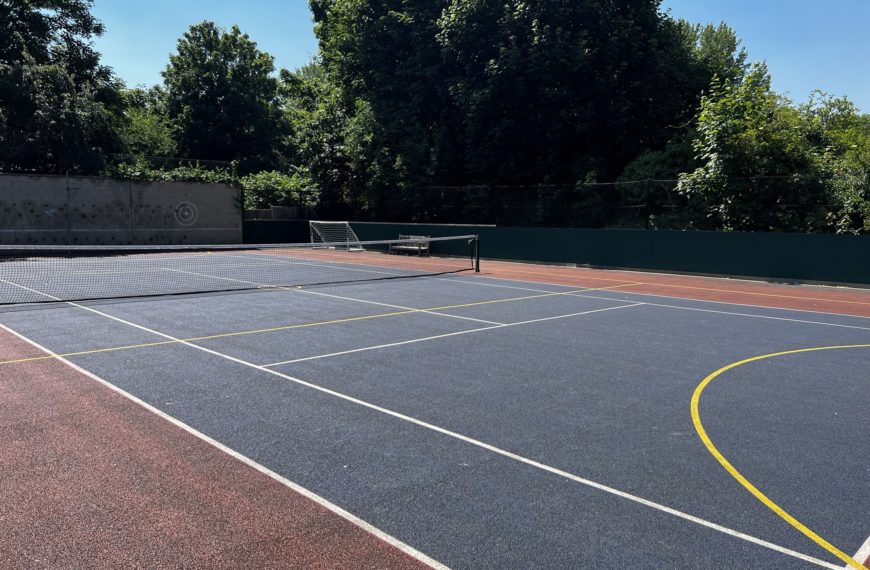
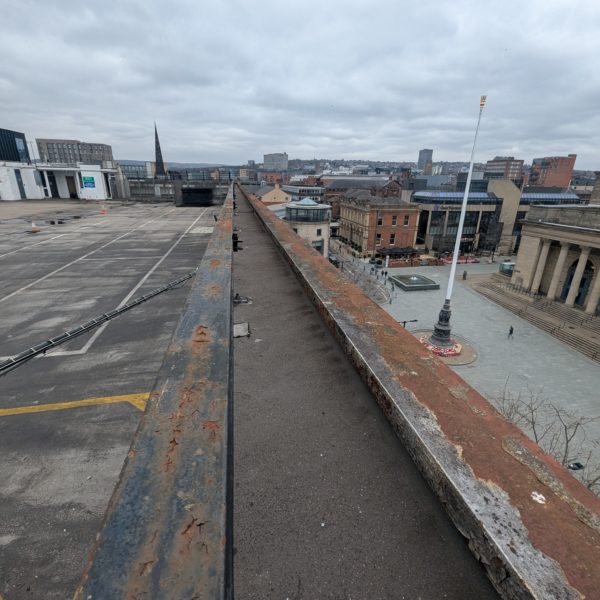
Our case studies show how Fourth Wall works in practice from navigating complex dilapidations claims and delivering development monitoring for commercial clients, to guiding heritage refurbishments and producing detailed RICS building surveys. Explore how we help landlords, asset managers, occupiers and developers make confident, informed decisions about the buildings they own, manage or occupy.



Download the Schedule of Condition Guide: For Landlords, Tenants & Occupiers
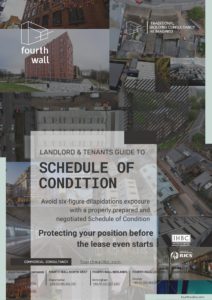
A Schedule of Condition is one of the most effective ways to manage risk at the start of a commercial lease. Whether you are a landlord protecting your asset or a tenant seeking to limit dilapidations liability, a professionally prepared schedule provides a clear, defensible record of the property’s condition at lease commencement.
This practical guide explains how Schedules of Condition work in the real world, not just in theory, and how they are used to support lease negotiations and minimise disputes at lease expiry.
Inside this guide, you’ll learn:
- How it can limit tenant liability for repairs and reinstatement
- What a Schedule of Condition is and how it forms part of a commercial lease
- Common mistakes made by landlords, tenants and advisers
- When a photographic schedule is sufficient and when a full survey is required
- How Schedules of Condition are used in dilapidations claims and negotiations
- What to look for when instructing a surveyor
Not sure whether a Schedule of Condition is enough?
A Schedule of Condition records the property’s existing condition, but it does not ordinarily provide detailed advice on defects, future repair costs or the wider liabilities you may be accepting under the lease.
Where you need to understand the property before committing, our Pre-Lease Survey and Schedule of Condition service can assess:
- Existing defects and areas of disrepair
- Likely repairs and maintenance during the lease
- Potential lease-end liabilities
- Budget costs and negotiating points
- Whether landlord works or lease amendments should be requested
You can also learn more about our dedicated Schedule of Condition surveys, explore our commercial property surveying services or read our guidance on preparing a Schedule of Condition before signing a commercial lease.
Already occupying the property or approaching lease expiry? Our commercial dilapidations surveyors can help you understand and manage your existing repair and reinstatement liabilities.
Why commercial tenants choose Fourth Wall
Inspections by experienced building surveyors
Your inspection is undertaken by a building surveyor who understands commercial construction, lease repair obligations and dilapidations.
We do not treat the service as a photography exercise or outsource the inspection to an unqualified data collector.
Experience at both ends of the lease
We advise tenants and landlords on dilapidations, repair liability and lease-end claims.
That experience informs how we prepare Schedules of Condition at lease commencement. We understand the details that may become important several years later and the weaknesses that can reduce the usefulness of an incomplete report.
More than a folder of photographs
Photographs are important, but they need context.
Our reports combine images with written descriptions, locations and a consistent structure so the evidence can be properly interpreted.
Advice proportionate to the transaction
Some tenants need a straightforward Schedule of Condition. Others need a detailed pre-lease survey, lease liability review or budget assessment.
We will help you select an appropriate scope based on the property and the risks you are taking on.
Commercially useful reporting
Our reports are prepared to assist everyone involved in the transaction, including:
- Business owners
- Property directors
- Operations teams
- Trustees
- Solicitors
- Agents
- Landlords
- Asset managers
The information is presented clearly so the relevant points can be identifie
What Our Clients Say.
We could tell you how great our team and services are, but that would be too easy. Why not take a look at what some of our previous clients have said?


Frequently Asked Questions
The cost depends on the size, type, condition and location of the property, together with the extent of the areas being leased, access requirements and how quickly the report is needed.
A small retail unit will usually cost less to inspect and report on than a large warehouse with roofs, yards, loading areas and extensive external boundaries.
Use our calculator to obtain an immediate indicative fee. We will then review the property information and confirm a fixed quotation before you instruct us.
A commercial Schedule of Condition is a detailed written and photographic record of a property’s condition at a specific date, usually immediately before a tenant enters into a lease.
It records visible defects, damage, deterioration and existing finishes so that the original condition can be referred to later.
A commercial lease can make the tenant responsible for repairing the property, even where defects already existed before occupation.
A properly prepared Schedule of Condition can help establish the condition at the start of the lease and support wording that limits the tenant’s obligation to return the property in any better condition.
No.
The Schedule must be properly referred to within the lease and the repairing obligations must be drafted to give it the intended effect.
Simply attaching photographs to the lease may not prevent the tenant from being required to put the property into repair. Your solicitor should ensure that the lease wording clearly limits the relevant obligations by reference to the Schedule.
Not necessarily.
A landlord may still pursue a claim for deterioration arising during the lease or for obligations that are not limited by the Schedule.
These may include: Maintenance; Decoration; Cleaning; Statutory compliance; Reinstatement of alterations; Removal of tenant fixtures; Yielding-up obligations.
However, a detailed Schedule can provide important evidence when considering whether a defect or item of damage was already present at the start of the lease
The Schedule should normally be prepared before the lease completes and before the tenant begins fit-out works or occupation.
This allows the existing condition to be recorded before it is altered and gives the tenant, landlord and solicitors time to review and agree the document.
A retrospective Schedule can sometimes still be prepared, but its evidential value may be reduced.
Once the tenant has taken occupation, it may be difficult to establish whether defects, damage or alterations existed beforehand or arose later.
We can review the lease, occupation date and available historic photographs before advising whether a retrospective inspection would still be worthwhile.
The final agreed Schedule should be expressly referred to within the lease and attached, annexed or otherwise securely retained with the completed lease documents.
Your solicitor should advise on the appropriate legal wording and make sure the correct final version is incorporated.
The incoming tenant will commonly commission and pay for the Schedule because it is intended to help protect the tenant’s position.
However, the cost can form part of the wider lease negotiations, and in some cases the landlord may already have prepared a document.
A tenant should consider whether a landlord-provided Schedule records the property independently and in sufficient detail.
You can prepare your own photographic record, but this may not provide the same level of detail, consistency or independence as a professional Schedule. Common weaknesses include: Missing areas; Photographs without clear locations; Poor image quality; No written defect descriptions; Inconsistent coverage; Failure to record the extent of damage; No clear link to the lease obligations.
A professionally prepared Schedule provides a more systematic and reliable record.
A photographic Schedule should ordinarily be supported by written descriptions.
A photograph may show that damage exists, but it may not clearly establish its location, extent, material or relevance. Written entries provide context and reduce the scope for later disagreement.
The inspection will normally include the internal and external areas forming part of the agreed demise, subject to safe and reasonable access.
Depending on the property and lease, this may include: Internal accommodation; Roofs; External walls; Windows and doors; Yards and hardstanding; Loading areas; Car parks; Fences and gates; Outbuildings; Plant compounds; Service areas. However, the exact scope will be confirmed before instruction.